


Birds of Paradise
West Papua, Indonesia
10 days - 9 nights
Birds of Paradise, The Dream Bird Photography Tour of the World
A journey into one of the last wild frontiers of bird photography — where the reward for patience is a display found nowhere else on Earth.
The tour begins in Jakarta
Location: Indonesia
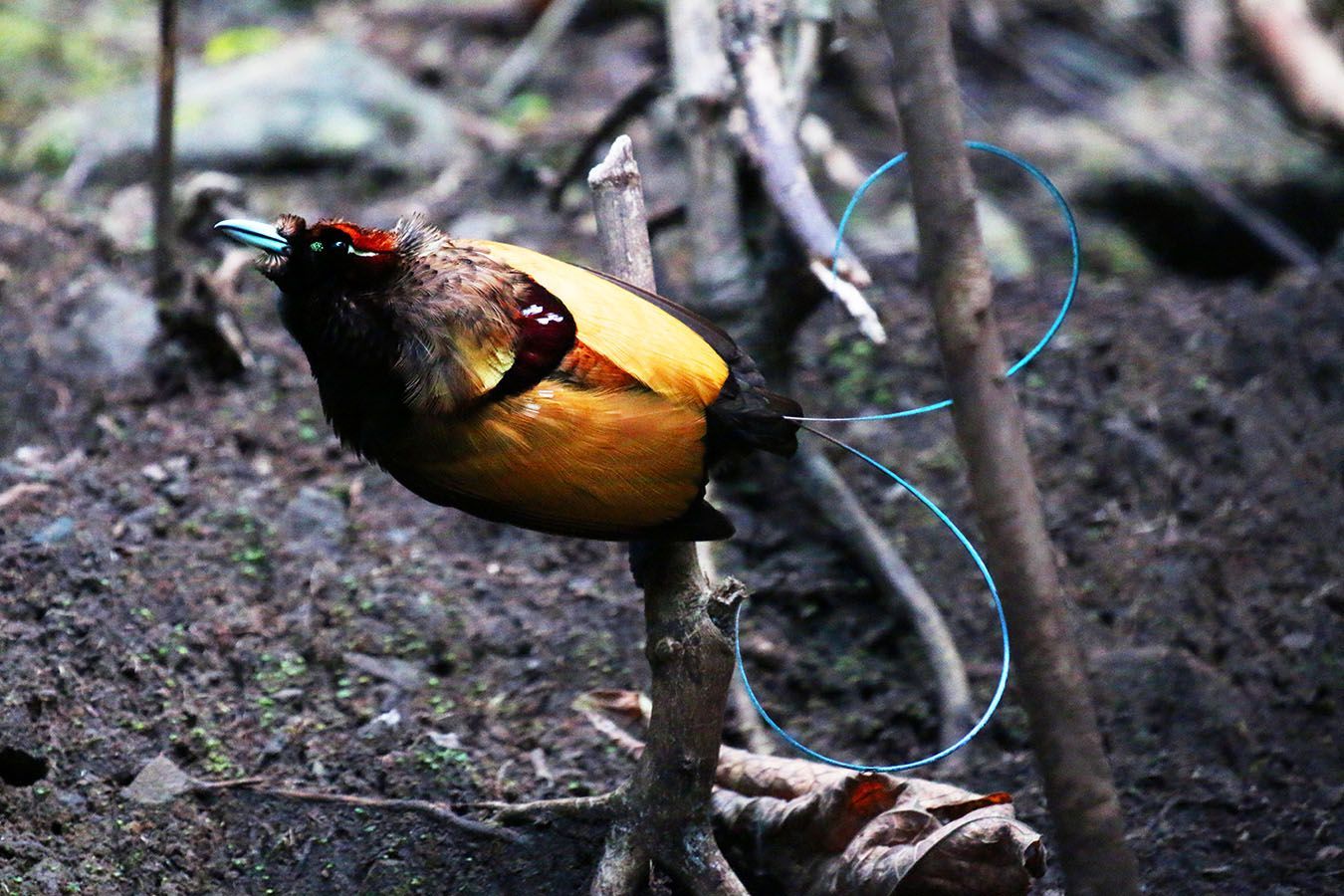
Some journeys are built around a single, almost impossible idea — that in the last great lowland rainforests on Earth, birds still dance for love. In West Papua, that idea becomes reality.
Over 10 unforgettable days, we trek through the untouched lowland rainforests of West Papua, home to some of the most extraordinary birds on the planet. This is a land where up to nine species of Bird of Paradise still perform their ancient courtship displays — a spectacle of color, movement, and sound found nowhere else on Earth. Alongside them, a remarkable range of regional endemics await, rewarding every early morning and every quiet hour spent waiting beneath the canopy.
And the journey doesn't end in the forest. We travel onward to Raja Ampat (Waigeo), widely regarded as the healthiest coral reef ecosystem left in the world — a place where the line between rainforest and ocean, between land and sea, feels almost sacred in its abundance.
This is not a trip of convenience. It's a trip of immersion. Trekking trails are moderate but real, and life in the field means staying in simple local homes — fan-cooled rooms, shared spaces, and basic but functional facilities, always including a proper sitting toilet in every village. This is what it means to travel through a place still wild enough to hold Birds of Paradise: humble, honest, and deeply connected to the communities who call this forest home.
West Papua is also a place that moves on its own terms. Flight schedules shift without warning, weather asserts itself, and the itinerary — while carefully planned — sometimes has to bend to forces far bigger than any of us. We ask every traveler to bring patience and flexibility alongside their camera gear, because the reward for that openness is almost always worth it.
This is raw, real, and rare — a journey into one of the last wild frontiers of bird photography, where preparation meets wonder, and every difficult mile leads to a moment you'll never forget.
Day 1 — Arrival in Jakarta
The adventure begins the moment we land. Meet up at Jakarta International Airport and settle into a nearby hotel to rest before the journey ahead.
Day 2 — Jakarta Bay Pre-Tour
An early start rewards us with a morning of birding in Jakarta Bay, chasing Christmas Island Frigatebird, Sunda Teal, Javan Pond Heron, Sunda Coucal, Red-breasted Parakeet, and Milky Stork until early afternoon. We rest and clean up at the hotel before preparing for a midnight flight to West Papua — heading to the airport after dinner.
Day 3 — Sorong to Malagufuk Village
Landing in Sorong marks the real beginning of the expedition. From here, it's a 2-hour drive by 4WD followed by a 2-hour walk along a boardwalk into Malagufuk village — our gateway into the Papuan lowland rainforest. Birding along the flat boardwalk may bring Common Paradise Kingfisher, Red-breasted Paradise Kingfisher, Frilled Monarch, Coconut Lorikeet, Large Fig-Parrot, Black Lory, Black-capped Lory, and Blue-Black Kingfisher.
Accommodation in the village is simple and honest: fan-cooled rooms, sitting toilets, cold showers, electricity available 6–8 hours per day, and internet only via Indonesian SIM card within the village. Mosquito nets are provided. Expect hot, humid lowland-forest weather.
Day 4–5 — Malagufuk: The Birds of Paradise Begin
Two full days dedicated to the birds that give this trip its name: Lesser Bird of Paradise, King Bird of Paradise, and the extraordinary Twelve-wired Bird of Paradise. The trekking here is long and undulating — it can be tiring, but we take it at an easy pace, with walks of around 60 minutes between key sites. A tower hide gives elevated views of the Twelve-wired BOP and Lesser BOP, while the King BOP is observed at low tree canopy.
We'll also seek the Magnificent Riflebird, Papuan Pitta, and Eastern Hooded Pitta from a hide, along with other specialties of the area: Papuan Paradise Kingfisher, Yellow-billed Kingfisher, and Hook-billed Kingfisher. After dark, the forest reveals its nocturnal side — Echidna, Couscous, Possum, Bandicoot, and Wallaby all call this village home.
Day 6 — Malagufuk to Raja Ampat
We leave Malagufuk in the morning to catch the 2 PM ferry from Sorong Harbor to Raja Ampat. The afternoon is easy and rewarding — birding around the beachside hotel grounds for Beach Kingfisher, Eclectus Parrot, Blyth's Hornbill, and Palm Cockatoo, among others. We rest at a beachfront resort known for hot showers, reliable wifi, warm hospitality, and outstanding seafood — a welcome contrast after the rainforest.
Day 7 — The Red Bird of Paradise
An early morning takes us to the dancing tree of the Red Bird of Paradise, photographed from a tower hide that brings the display close to eye-level — one of the true highlights of the trip. The afternoon is reserved for roadside bird photography, and after dark we search for Raja Ampat's endemic mammal, the Waigeo Spotted Cuscus.
Day 8 — Wilson's Bird of Paradise
This morning belongs to one of the most breathtaking birds on Earth: the Wilson's Bird of Paradise, observed from a hide, typically until around 8:00 AM.
Day 9 — Sorong Mangroves
A morning ferry returns us to Sorong, where we head into the mangrove areas in search of Orange-fronted Fruit Dove, Brown-backed Honeyeater, and Little Kingfisher. We overnight in a comfortable hotel.
Day 10 — Departure
We fly back to Jakarta. Tour ends.
A note on travel in West Papua: We're exploring a remote corner of a developing region, where flight schedules can change without notice and nature sets its own terms. An open, flexible mindset goes a long way here — we do everything possible to hold to this itinerary, but the wildest places rarely follow a fixed script. That's part of what makes them worth the journey.
All Rights Reserved | Birds and Wildlife Photo Tours Colombia
Additional information
- Tour guide.
- All domestic flights.
- All local transport, local guides and porters.
- Conservation area and hides permits. All meals, snacks, and accommodations. The food is according to the local tradition and can consist of rice and vegetables or noodles and vegetables. Water is also included. It is often boiled water because it is kindest to the environment and as safe as bottled water.
- Travel Insurance,
- Alcohol,
- Laundry,
- Extra luggage cost (more than 20 kg),
- Vaccinations, malaria prophylaxis,
- Visas,
- International flights to and from Bali or Jakarta, Indonesia.
- Tips to guides, porters, and local families.
- Diving gear and other activities not mentioned in the itinerary.
Luggage allowance
The baggage allowance for domestic flights is usually 20 kilos, but some airlines have only 15 kilos. We do our best to avoid these, but sometimes they are the only choice we have. Within a group, it always gets sorted out at no extra cost. It's also safe to leave things in the hotel in Bali if you want to.
Facilities:
Most of the places we visit have guesthouses or bungalows with simple beds and mosquito nets, but some don’t. Such as in the Arfak and Baliem Valley in the Snow Mountains. So please bring your own sleeping bag and mattress if your trip includes Arfak or Baliem Valley.
We will have access to electricity on a regular basis, but not in the German and Japanese Camps in the Arfak Mountains or in the Baliem Valley. In the trek to Lake Habema in Wamena, you will need to carry just your bins, a small umbrella, and a bottle of water. We will have enough porters to carry the heavy stuff and the food. The porters will build shelters for us during the trek in the Baliem.
It is not certain that you will get hot water in all hotels. You will also meet the Indonesian way of washing: the mandi. Mandi is either a large bucket of water or a container made of bricks. The mandi is filled with water, and you clean yourself by scooping up water from it. This is also how you flush the toilet. Also, prepare for squat toilets. Toilet paper is rarely used; we always bring our own. When we are staying in villages or trekking, locals help us with laundry.
Equipment:
You will need binoculars. Camera. Day pack to keep bins and water. Good trekking boots. Sleeping mat. Sleeping bag (comfort temperature 0-5 degrees). Warm hat + mittens. Warm jacket, windbreaker, or fleece sweater. Mosquito net. Mosquito repellent. Rain coat/poncho or small umbrella. Flashlight/headlamps. Water bottle.
We travel close to the equator, where it is 32-34 degrees Celsius most of the time at sea level. Also to an altitude of 1700 m in the Arfak Mountains and 3400 m in the Baliem Valley. The air is very humid, and it is raining almost every day. That is why a small umbrella is very useful, as the rain can start without warning. It is also why the area is called a rainforest.
When we travel to the Papuan highlands (the Baliem Valley and the Arfak mountains) we won’t encounter any mosquitoes, but when in lower land such as Nimbokrang, Waigeo, Wasur NP or Moluccan islands there are plenty of mosquitoes. In the Arfak Mountains, the days are warm (25-28 degrees Celsius) and the nights are cold (5-18 degrees Celsius). In the Baliem Valley, the nighttime temperature will be close to 0 degrees. You would need to add warm clothes, such as long-sleeved shirts and long trousers.
Health:
Please be as fit as possible and have no heart problems, as the trek will be moderate to tough. Especially to the Papuan highlands (Arfak & Baliem valley). Do not forget the Malaria medicine, Papua is a risk zone infested with chlorine-resistant malaria mosquitoes. You need malaria prophylaxis, and it does not guarantee 100% protection. The drugs for protection are Lariam = mefloquine and Malarone = atovakvon+proguanil. You cannot buy these meds in Indonesia. So please contact your doctor and also bring strong mosquito repellent with you.
Please contact your general practitioner about any other vaccinations you might need. Remember that we travel off the beaten track almost all the time. Bring all your daily meds, as they might not be available to buy in Indonesia.
Food and drink:
We eat what the locals eat. To be a vegetarian in Indonesia is no problem, they often use tofu and tempe (fermented soy-bean paste –very delicious) as the main protein source. All meals are included when we stay in the villages. Breakfast is included on the days we stay at a hotel. Please state if you are allergic to something.
The eastern part of Indonesia is the most expensive region, as it has very little production of its own and almost all food items are “imported” from other islands such as Java or Sulawesi. A lunch at a restaurant would cost 40.000 rupiahs, which is about US$3.20, depending on the exchange rate at the time.
Wamena (Baliem Valley) is extremely expensive as there are no roads connecting the region to the North or the South. Everything is flown in, and bottled water costs around 20.000 rupiahs (compared to 4.000 rupiahs in Bali).
We are never far from streams on our trek, so we use fresh water from them and boil it. Never use tap water in Indonesia, not even for brushing your teeth. Water used for ice cubes is boiled water. As plastic bottles are becoming a major waste issue in Indonesia, please reuse your bottles and refill your water to help reduce plastic waste.
Rain and bad weather:
We will be in the tropics, so there are frequent rain showers now and then. This usually happens in the afternoons, but morning rain is possible at all the sites we visit. We try to use our time as best we can so we don´t waste birding time, but during heavy rains we just have to accept the situation and wait it out. Please keep a positive mind when this happens. It is nobody´s fault. It is what it Please get in touch with your general practitionerto reach an Islands,the ,lower-lying areas,Mountainsplease get in touch with your doctor,soybeantempeh;Being practitioner to Mountains please
Should you have any questions or be wondering about any of the above, please get in touch with us for further clarification or agreement.