


PUMAS of Torres del Paine
Chile
6 days / 5 Nights
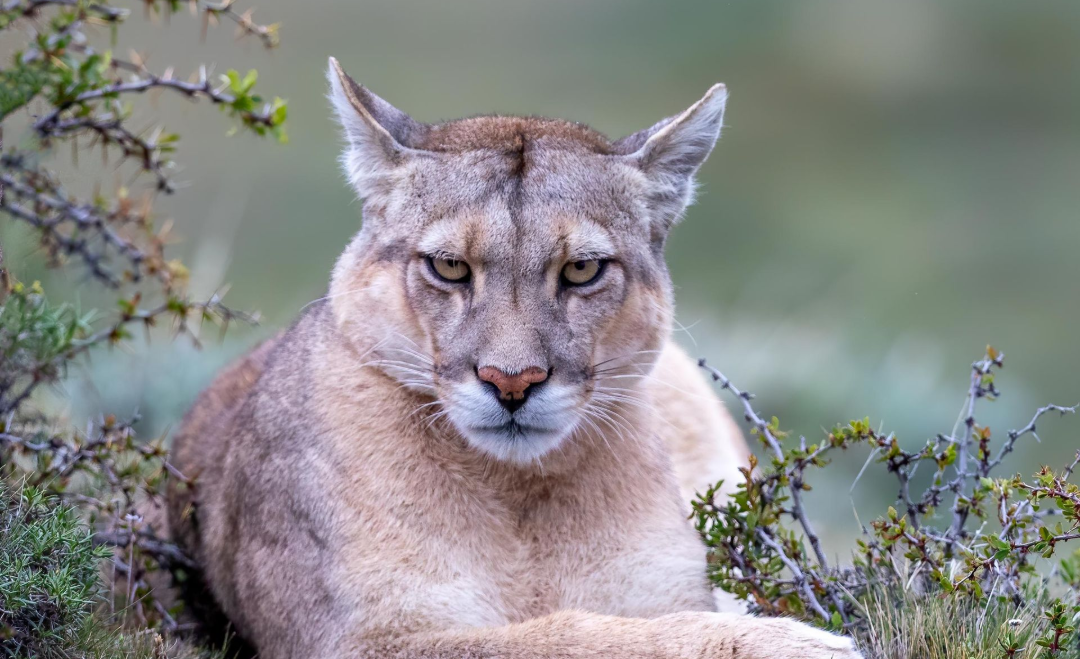
Puma Photo Safari: Torres del Paine, Chilean Patagonia
The tour begins from: Punta Arenas - Chile.
Location: Chilean Patagonia..
Few landscapes on Earth compress so much drama into a single view. Torres del Paine sits in the heart of Chilean Patagonia, where windswept steppe gives way to turquoise glacial lakes, and the three granite towers that give the park its name rise sheer against the sky. It's a landscape built on scale and contrast — and it happens to be the best place in the world to photograph pumas in the wild.
These rolling hills and open grasslands support one of the densest and most habituated puma populations anywhere on the planet. Here, you'll find them lounging on rocky outcrops, stalking through the scrub, hunting, and raising their young — all against a backdrop few other places can match. The park's real engine is its guanaco herds, thousands strong, whose presence across the steppe is what sustains such a healthy puma population and creates constant opportunities for real predator-prey behavior in front of the lens.
We visit in June and July, deep in the Patagonian winter, when the park empties of summer crowds and the entire landscape turns into something closer to myth: snow dusting the steppe, ice rimming the lakes, and pumas moving across a white, wind-carved world with the Torres themselves standing frozen in the distance. The light is low, long, and extraordinary for much of the day — ideal for the kind of contrast and mood that separates a good puma photograph from an unforgettable one.
Every outing is guided by professional local puma trackers who know the resident cats, their territories, and their habits intimately, giving us the best possible chance of sustained, respectful encounters — days built entirely around finding these big cats and watching them move through one of the wildest landscapes left on the continent.
Day 1 — Drive from Punta Arenas to Torres del Paine
We will depart from Punta Arenas and drive north toward Torres del Paine National Park, immersing ourselves in some of the most spectacular landscapes in Chile—and arguably one of the best places in the world to observe and photograph Pumas.
We will break up the approximately four-hour drive with an early lunch in the charming town of Puerto Natales, located on the shores of the Última Esperanza Sound and surrounded by fjords and mountains.
Upon entering the park, we will begin familiarizing ourselves with the landscapes and adjoining reserves where Pumas are regularly seen. This will be our first introduction to the area and to the wildlife inhabiting its open steppe, shrublands, and small lagoons.
As dusk approaches, we will have our first opportunity to look for Pumas. We will then return to our accommodation in the steppe for dinner and review our plans for the following days.
Overnight in Cerro Castillo.
Days 2–6 — Full Days of Puma Photography
Dawn and dusk are the most active periods for Pumas and offer the best light for photography, so we will focus our efforts during these times of day.
With the support of professional Puma trackers, we will explore the hills and valleys in search of these elusive cats. When a tracker locates an individual or family group, they will communicate its position by radio and advise us on the best way to approach, always maintaining a safe distance and ensuring that the animals are not disturbed.
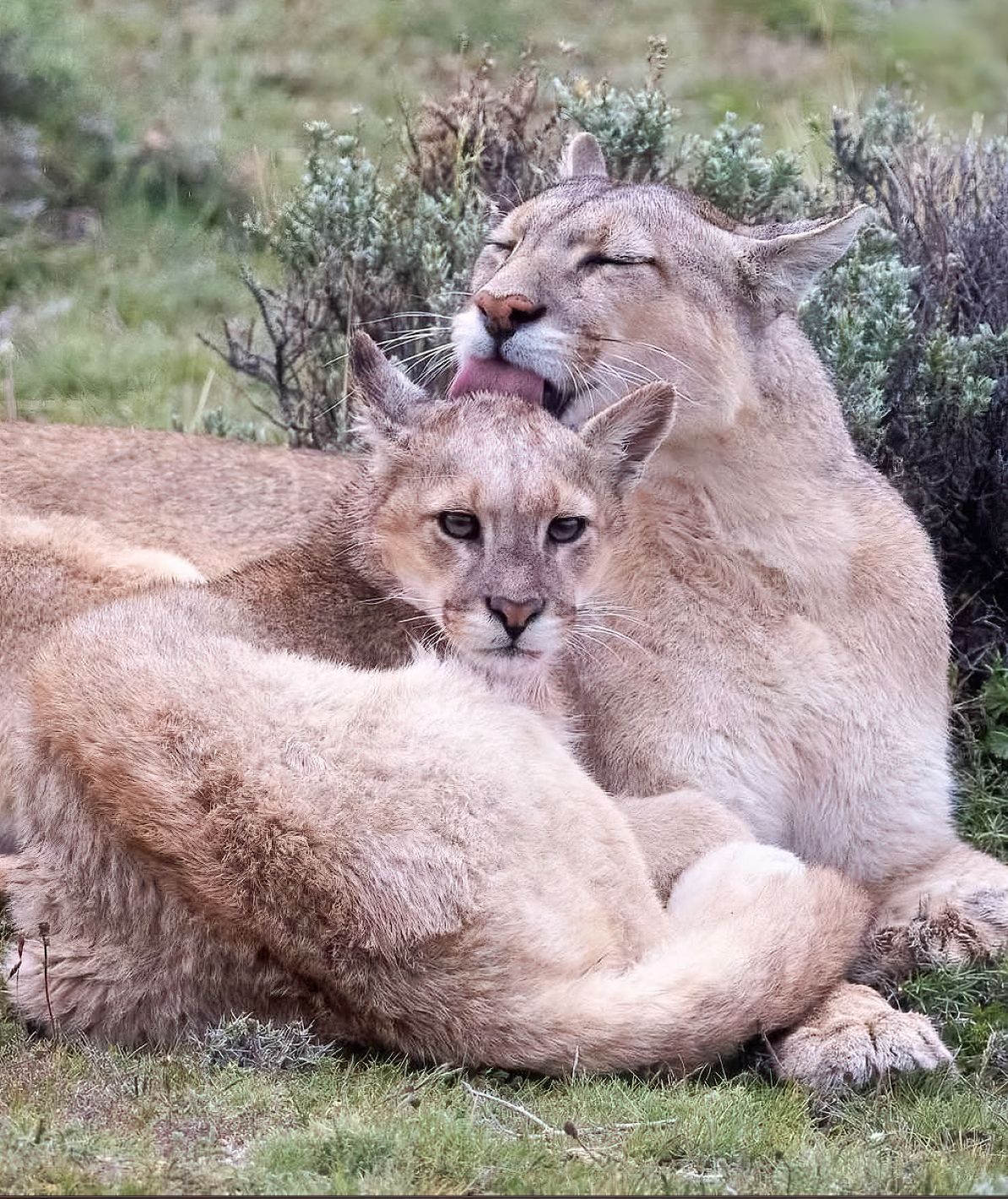
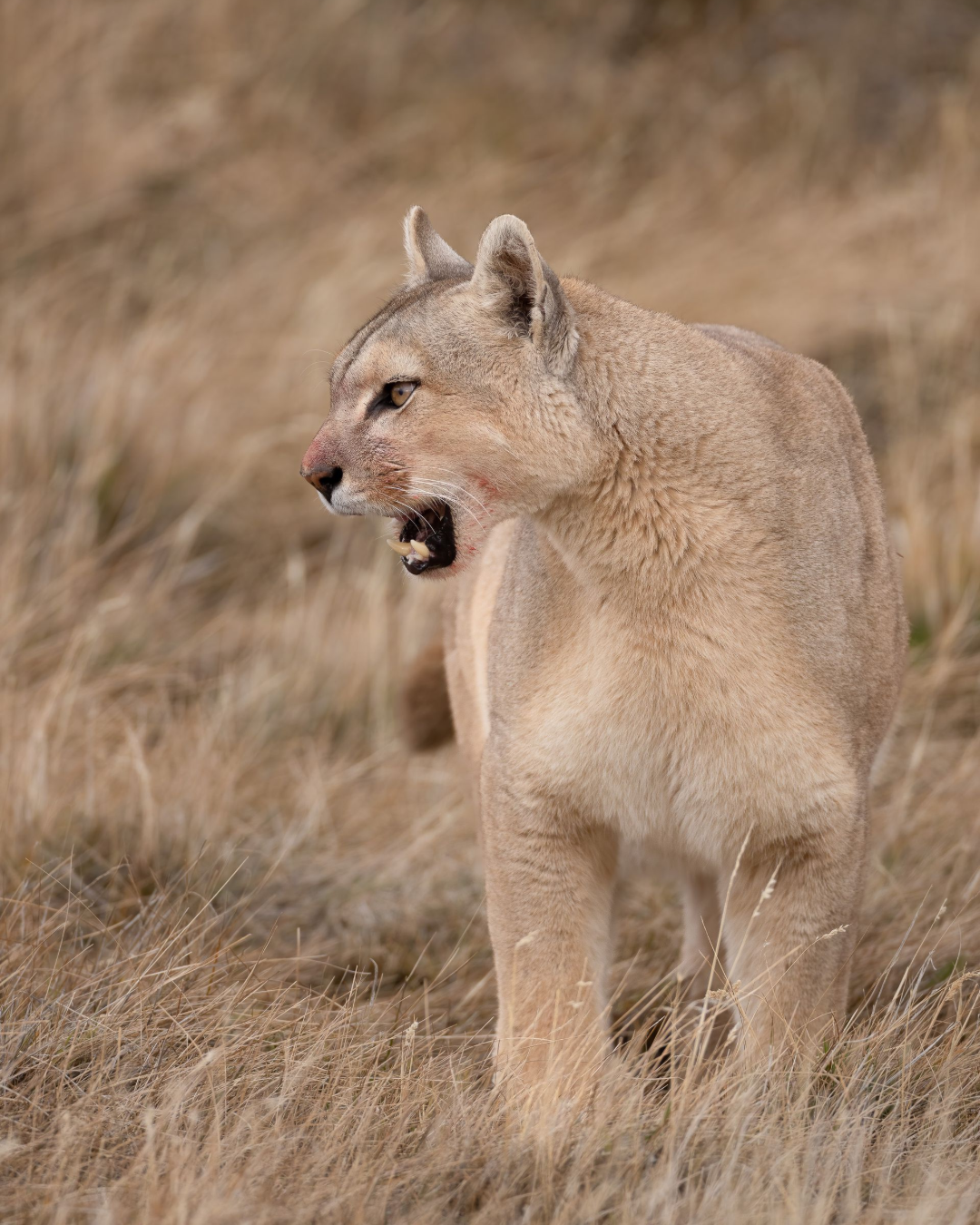
The photographic opportunities in this region are exceptional, as several Puma families inhabit the area. Depending on the season, we may observe females with their cubs, Pumas stalking prey, or males patrolling the hillsides.
During the quieter hours of the day, we may explore other areas of the park in search of birds and additional wildlife. Species of particular interest include:
Andean Condor
Cinnamon-bellied Ground-Tyrant
Patagonian Mockingbird
Magellanic Woodpecker
Austral Rail, recently rediscovered in the region
Other mammals we may encounter include Southern Andean Deer, Guanaco, Patagonian Hog-nosed Skunk, Gray Fox, and Patagonian Hairy Armadillo.
Throughout our stay, there will also be abundant opportunities to photograph the dramatic landscapes of Torres del Paine and the surrounding Patagonian steppe.
Overnights in Cerro Castillo.
Day 7 — Return to Punta Arenas
On our final morning, we will enjoy breakfast at the hotel before beginning the journey back to Punta Arenas. We expect to arrive in the afternoon, allowing time to board our return flight to Santiago later that day.
Additional information
- Accommodation specified or similar to a double room.
- Private transport.
- Full board (all meals included, starting and ending with the lunch/box lunch).
- Birding-wildlife English-speaking guide/driver.
- Torres del Paine Park entrance fee.
- Travel assistance insurance during the whole trip.
- Entrance fees for 4 days at a private ranch, home to wild pumas.
- 4 days of Professional Puma Tracker (a mandatory requirement for accessing the ranch and searching for Pumas)
- e-Bird checklist
- Tips for waitstaff
- International FLIGHTS
- Internal Flights (Santiogo - Punta Arenas - Santiago = 300USD)
- Alcoholic Drinks
- A la Carta Dishes
- Desserts, ice creams, and other unspecified.
- Nights before or after the tour.
- Bring Binoculars
- Photography equipment
- Bring sunscreen
- Bring sun hat/ sunglasse
- Bring a jacket in case it is cold or windy
- Consider wearing comfortable shoes for expeditions (ideally trekking shoes)
- Wear light clothing for dry and hot weather for the evenings, the temperature is around 20-25°C (central Chile)
- Consider bringing a plug adapter, since Chile uses a 220 V European plug.
- For your comfort, we recommend traveling with no more than 15 kg of luggage. On some trips, all-terrain wheeled suitcases are especially advised.
And most importantly, have all the desire to know and enjoy the expeditions, which have a lot to offer:
Chile is the longest country in the world; it extends from the arid Atacama Desert and the Pacific coast in the north, through mountains and valleys in its central region, to the diverse landscapes of Patagonia. Its territory ends north of the Antarctic Circle.
For this reason, Chile has diverse climates, landscapes, cultures, cuisines, and topographies across its regions. Each region has cities and neighborhoods where you can learn more about the country and discover amazing places to explore. Chile is not a country where you can stay for a week and see everything. It's a huge place to travel for a certain period of time, and you can still find yourself scratching the surface.
LOGISTICS COULD CHANGE FOR MANY REASONS AS FOLLOWS:
Bring your reusable bottle, and the guide will refill it with water whenever you need it.
Reduce your waste by recycling, reusing, and avoiding buying disposable containers.
Use water and electricity responsibly.
Reuse towels in hotels to avoid unnecessary washing. Avoid printing documents and prefer their digital backing, when possible.
Respect and protect local customs and traditions.
Prefer crafts and products made locally.
Return with your waste or pass it to the guide for responsible disposal.
Retorno Birding & Wildlife Photography Tours and its partners and collaborators are not responsible for cancellations (flights, excursions, navigations, among others) or changes during the program due to weather conditions, natural disasters, social conflicts that do not allow the proper functioning of the institutions (strikes, blockades, traffic, protests, wars, among others), and itinerary modifications.
Retorno Birding & Wildlife Photography Tours is not responsible for any additional charges arising from the reasons mentioned above or for flight changes that prevent us from delivering the services previously established.
The opinions expressed by the guides and drivers during the trip are their sole responsibility and do not necessarily represent the views of Retorno Birding & Wildlife Photography.
Retorno Birds & Wildlife Photography is not responsible for health problems arising from any pre-existing condition of the affected person (passenger) or for any circumstance not associated with our company's practices. Albatross Birding & Wildlife Photography reserves the right to suspend the tour if any participant’s health presents a risk to their own safety, the guide’s, or the group’s. Passengers must report any pre-existing condition to take precautionary measures. We strongly recommend traveling with travel insurance.