


Into the Western Amazon:
The Road to Chiribiquete
Western Amazon
Rock Art, Rainforest, and the Rare Birds of the Chiribiquete Frontier
The tour begins from: San Jose del Guaviare.
Location: Serranía la Lindoza (Guaviare).
Season: November to January
There is a point in Colombia where the Amazon rainforest begins to reveal its oldest secrets — and that point is San José del Guaviare. Known as the gateway to Chiribiquete National Park, one of the largest protected rainforest areas on Earth and a UNESCO World Heritage Site, this small river town sits at the threshold of a landscape few travellers ever witness firsthand. From here, ancient stone tepuis rise out of unbroken jungle, rivers run dark with tannins, and rock walls hold paintings tens of thousands of years old — a living record of the people and wildlife that have called this region home since long before recorded history.
San José del Guaviare owes much of its geological identity to the Guiana Shield, one of the oldest geological formations on the planet. Stretching across Colombia, Venezuela, Guyana, Suriname, French Guiana, and northern Brazil, this shield forms the bedrock beneath vast stretches of the Amazon Basin, giving rise to towering tepuis, ancient rivers, and forest ecosystems found nowhere else on Earth. It is a landscape shaped over billions of years, and one that continues to harbour species so specialized, so perfectly adapted to these rugged, humid environments, that many exist only within this narrow geological cradle.
A Living Spectacle: The Guianan Cock-of-the-Rock
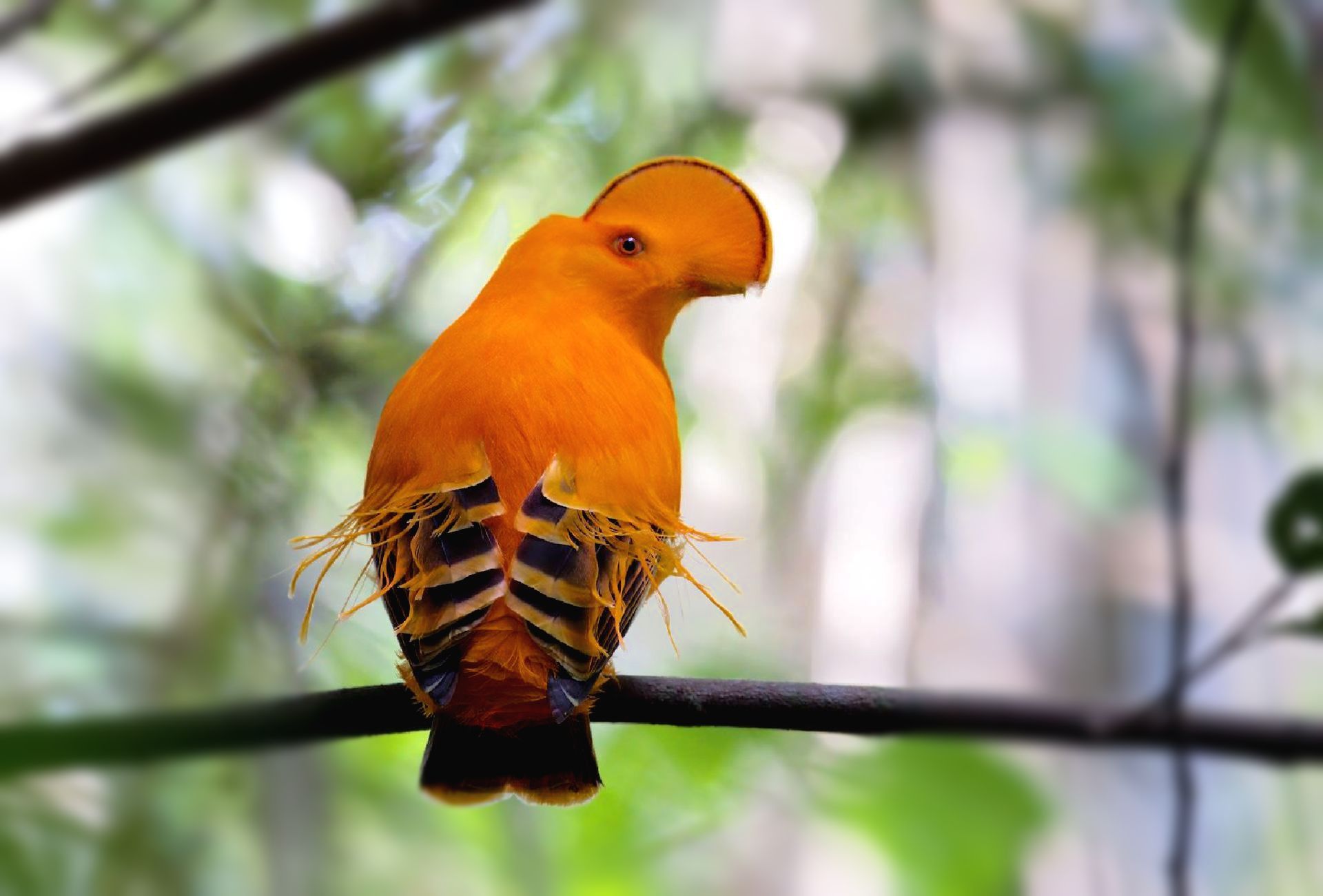
Few birds embody the wild character of the Guiana Shield quite like the Guianan Cock-of-the-Rock (Rupicola rupicola). The male's brilliant orange plumage and unmistakable half-moon crest make it one of the most photographed birds in South America — and one of the most rewarding to witness in the field. These birds seek out humid, rocky forest habitats, often nesting near cliffs and cave systems, where the region's ancient sandstone formations provide exactly the vertical rock faces they need to breed.
Females alone take on the work of raising the next generation, constructing cup-shaped nests from mud and plant fibre on sheer rock walls, then incubating and rearing one to two chicks entirely without help from the male. The males, meanwhile, gather in communal leks — theatrical arenas where they compete for female attention through bowing, head-bobbing, and a chorus of loud, grating calls. Witnessing this display in person, deep within the same ancient landscape that shaped the bird itself, is one of the most memorable wildlife encounters this region has to offer.
Day 1. Playa Güío / Laguna Negra
We'll pick you up at your hotel in San José del Guaviare and head straight into the wild heart of the region, starting at the Puerta de Orión — a towering rock formation in the Serranía de la Lindosa, sculpted over thousands of years by relentless erosion. From there, we'll continue to the village of Playa Güío, where a water trail leads us into Laguna Negra. Gliding by canoe across its still, dark waters, we'll keep watch for the Hoatzin (Opisthocomus hoazin) — a bizarre and ancient-looking bird often nicknamed the "stinkbird" — and the Horned Screamer (Anhima cornuta), its haunting calls echoing across the lagoon. The mirror-like surface of the Caño Negro, framed by dense forest, sets the tone for the adventure ahead.
Day 2. Laguna Los Cámbulos / Gallito de Roca Nature Reserve
We'll travel 19 km from San José del Guaviare along the road to Barrancón to reach Los Cámbulos, a sprawling 6,000-hectare wetland complex of sandbanks and mudflats where grasses and shrubs create ideal habitat for seedeaters, shorebirds, and a wealth of waterbirds — ibises, sandpipers, and the ever-graceful Osprey (Pandion haliaetus) hunting over the water. In the afternoon, we'll walk a white-sand trail through a nature reserve that has been under restoration for more than 15 years, now home to the striking pink aquatic plants (Macarenia clavigera) that carpet the riverbed in colour — a scene that rivals the famous Caño Cristales itself.
Day 3. Raudal del Guayabero / Yuruparí Rock Paintings
Today we explore the Raudal del Guayabero, a river that winds down from the Sierra de la Macarena like a serpent threading through rocky formations. Along the way, keep an eye out for primates, birds, and — if we're fortunate — river dolphins surfacing nearby. At Puerto Lucas, we'll begin the climb to a panel of pre-Hispanic rock art more than 8,000 years old, said by local legend to depict the hierarchy of life itself. From the summit, a viewpoint rewards us with a sweeping vista of unbroken rainforest cut through by the river below.
Day 4. La Esperanza
We'll set out along an 8-km trail of moderate-to-challenging difficulty inLa Espernza Private Reserve, 18 km from San José del Guaviare. The path crosses open pastureland and sandstone forest before reaching a lookout point — prime territory for spotting the Guianan Cock-of-the-rock (Rupicola rupicola) and the striking Paradise Jacamar.
Day 5. Happy Life Feeders/ Bancos de Arena
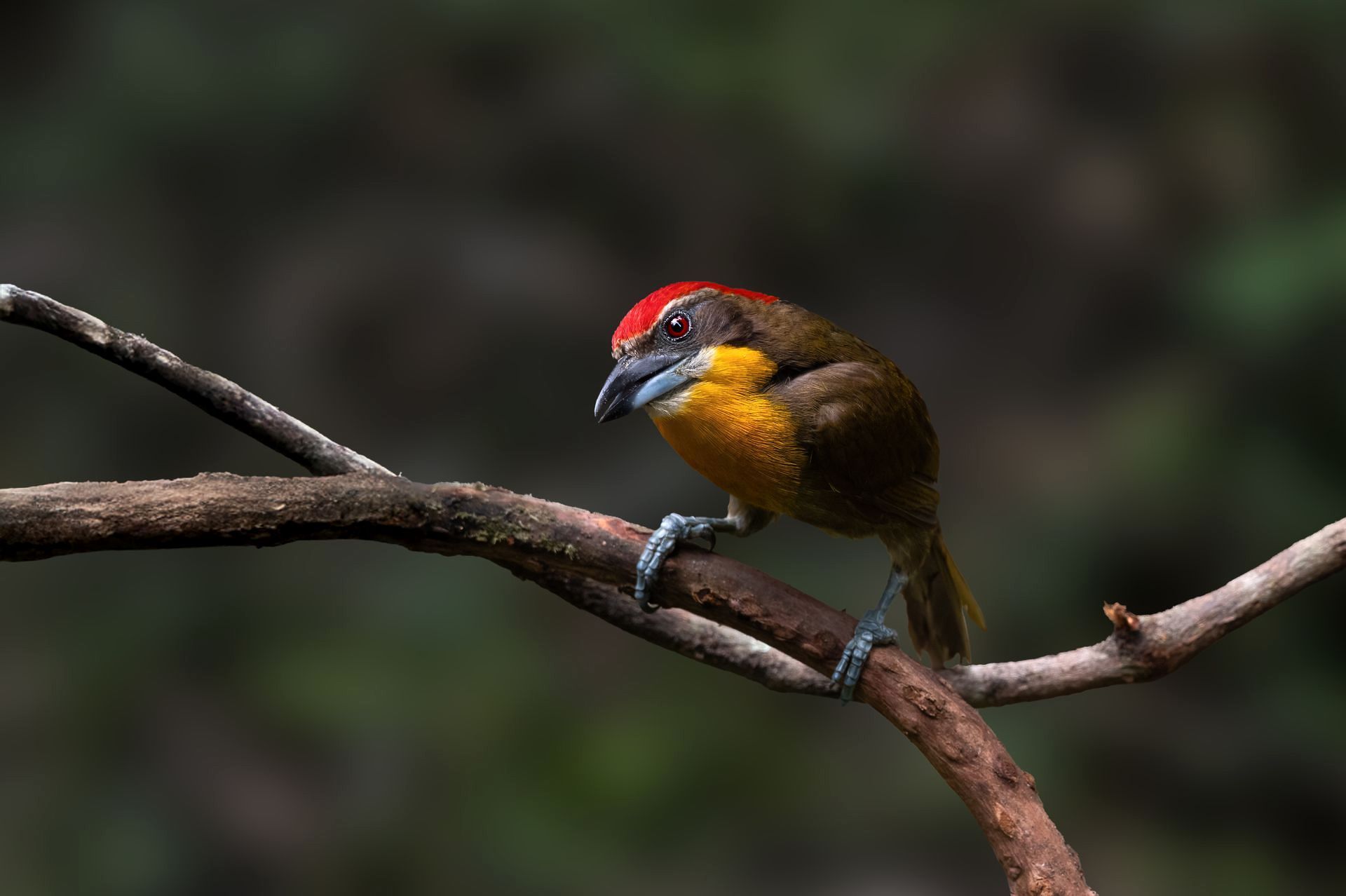
To close the tour, we'll spend the morning at a feeding station set within a várzea ecosystem along the Guaviare River — the very first bird feeding station established at the gateway to the Colombian Amazon. Here, the photography opportunities are exceptional: the Turquoise Tanager (Tangara mexicana), Silver-beaked Tanager (Ramphocelus carbo), Masked Crimson Tanager (Ramphocelus nigrogularis), Scarlet-crowned Barbet (Capito aurivirens), and White-eared Jacamar (Galbalcyrhynchus leucotis) are all regular visitors. Along the surrounding trail, keep your camera ready for the striking Wire-tailed Manakin (Pipra filicauda), performing its distinctive courtship display in the understory.
Day 6. Finca Ecoturistica El Chotaduro/ Cerro Azul
We'll travel to the village of Cerro Azul and visit Finca Ecoturística El Chotaduro, a working farm with a powerful story to tell. Here, you'll learn the history of a property that once bore witness to the impact of coca cultivation, discovering the true process behind its production, as well as the remarkable transformation the local community has undergone in its search for hope and a new way of life. Along the way, we'll also keep an eye out for the Mottle-faced Tamarin (Saguinus inustus), a small and elusive primate found in only a handful of places on Earth.
After lunch, accompanied by the local Fantasías de Cerro Azul Association, we'll explore Cerro Pinturas — home to 12,000-year-old rock art, rich birdlife, and a natural cavern — guided by a member of the local community
Four to Six Photographers: $3.790 USD each
New Paragraph
Additional information
- Ground transportation on the stipulated routes.
- A birdwatching guide or Photographer guide.
- Local guides where necessary.
- Meals are defined for each day: b- Breakfast, l- Lunch, and d- Dinner.
- Entrance fees to the reserves.
- Two days, one night of bird photography tour.
- Double accommodation.
- Pick up and drop hotel in Bogotá.
- Accompany to take every picture as needed
- International flights.
- Domestic flights.
- Nights before or nights after the tour.
- Meals not stipulated.
- Wire Transfer extra costs are 0,5% per transaction.
- Laundry.
- Alcohol Beverages.
- Insurance.
- Other expenses are not specified.
- Tips.
- Bring Binoculars
- Photography equipment
- External memory for downloading pictures at night.
- Computer to process at night.
- Be prepared for rain and sun: waterproof rain jacket and quick-drying clothing.
- Bring a camera protector.
- Bring silica gel to store the equipment at night and avoid humidity.
- Sunscreen, hat, or cap.
- Waterproof trekking boots or rubber boots.
- VERY IMPORTANT: insect repellent
LOGISTICS COULD CHANGE FOR MANY REASONS AS FOLLOWS:
a. Bird activity.
b. For the decision of the travellers.
c. Security issued. Healthy issue. Road Issue.
e. Other no specify.
The travellers have to accept any of these changes. If the shift carries extra costs, they assume them. The price is budgeted before the change.
Retorno does not provide equipment rental or loan service; each person must bring their cameras, lenses, batteries, memories and computer to carry out the activity in the best conditions. Retorno is not responsible for the loss, deterioration, or theft of photographic equipment or accessories.
RETORNO does not guarantee any species of birds or photography of them; nature is unpredictable.
RETORNO works hard to have the best logistics and protocols for safety during your visit to COLOMBIA BIRD PARADISE.