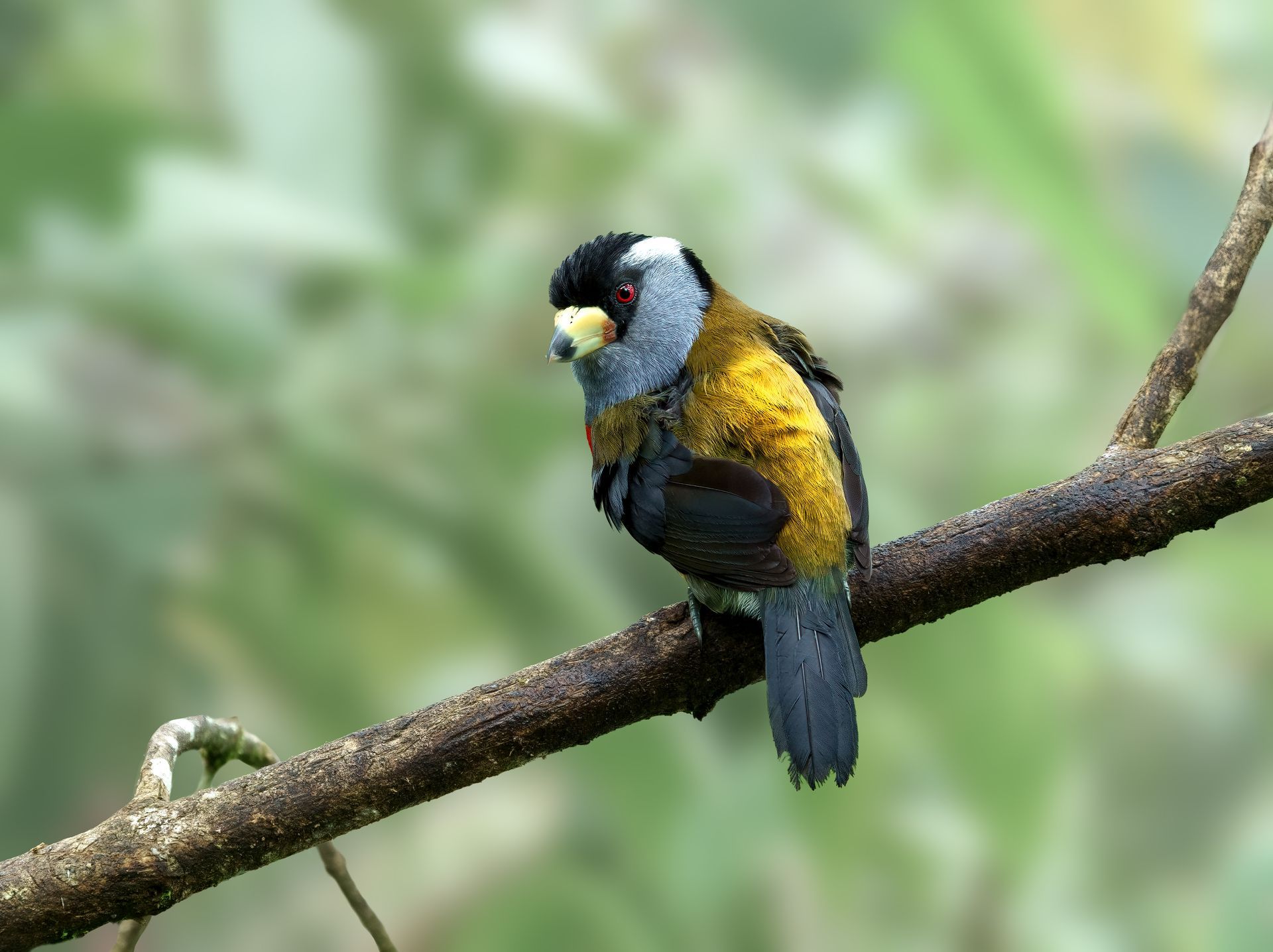
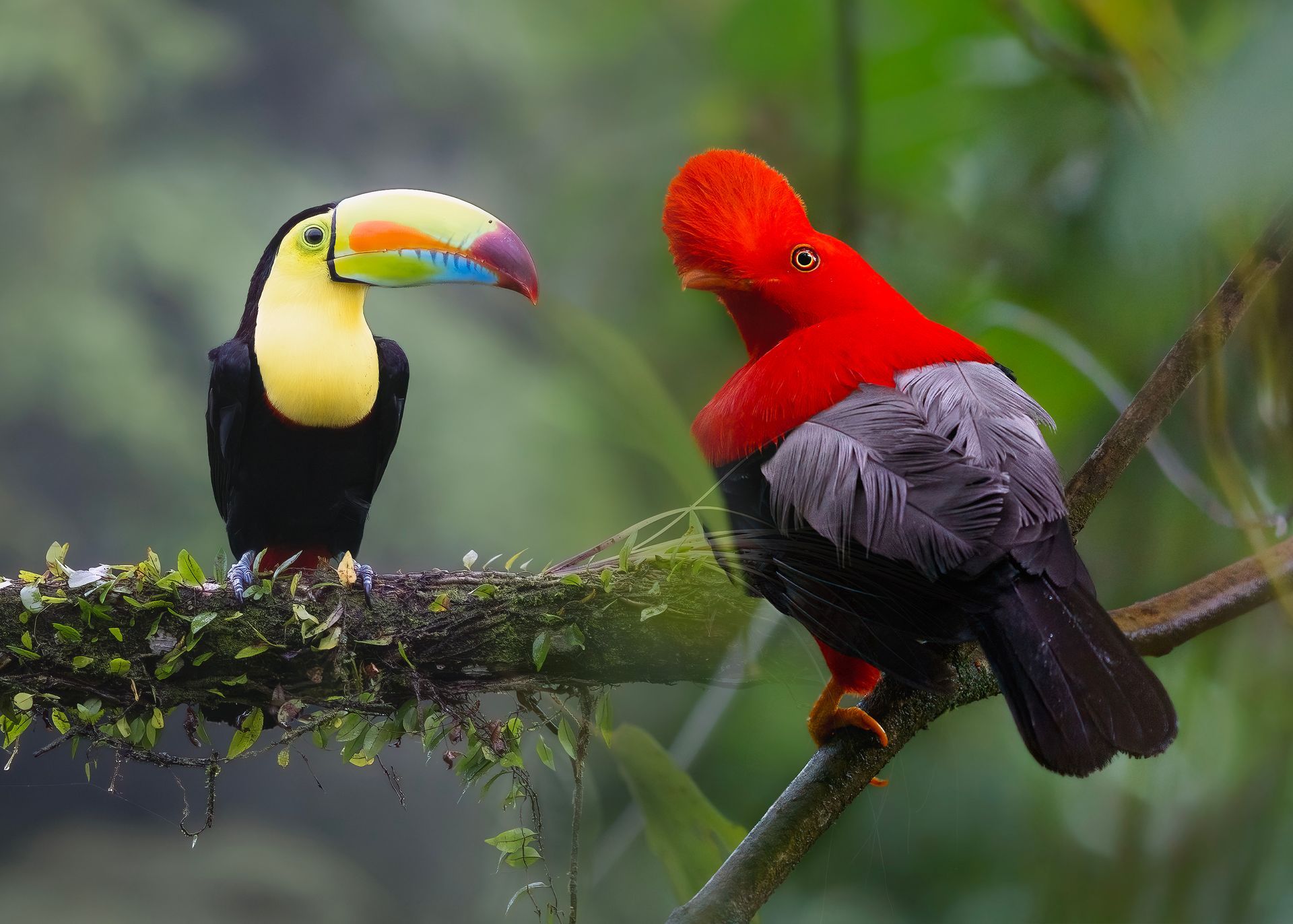
Saturated bill, glossy black plumage, a flash of yellow or red at the throat, and a rainforest canopy that refuses to sit still. Learning how to photograph toucans is less about chasing that first dramatic sighting and more about anticipating their behaviour, finding workable light, and making disciplined choices when the moment arrives.
For photographers travelling in Colombia, the reward is exceptional variety. From lowland forest and Caribbean dry forest to foothill habitats on the edge of the Andes, different toucan species occupy different layers of the landscape. The challenge is equally varied: dense foliage, high perches, uneven light, and birds that may pause for only a few seconds before moving on.
How to Photograph Toucans: Start With Behaviour
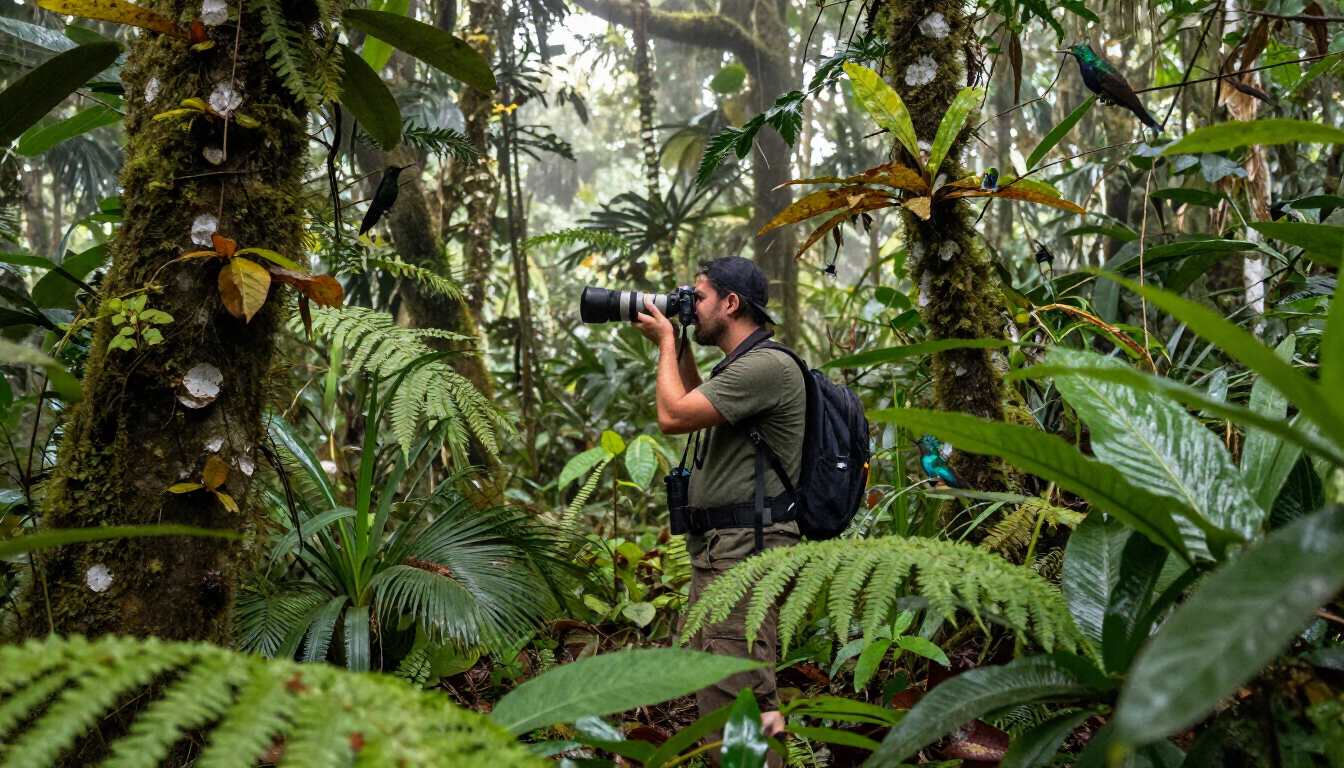
You usually don't photograph toucans by walking quickly through the forest with a camera at the ready. You often detect them first by sound, movement in fruiting trees, or a guide who recognizes a favoured feeding area. Slow down, listen, and look up into the canopy rather than scanning only at eye level.
Fruit opens many opportunities. A fruiting tree can attract toucans repeatedly, sometimes bringing birds into the same open branch or feeding zone over several mornings. Do not rush in beneath the tree. Settle at a respectful distance, identify where the light falls, and watch the bird’s movement pattern. A toucan may hop between concealed perches before stepping into one clean window for a brief but valuable frame.
Their body language can help you prepare. Before launching, a toucan may lean forward, shift its feet, or look in the direction it intends to travel. Before feeding, it may pause to inspect fruit or toss food with its bill. Those small moments create photographs with more story than a static profile.
Find Light That Shows the Bill Without Losing the Bird
The bill is why many photographers come away captivated by toucans, but it creates an exposure challenge. In a single bird, you may have deep black feathers, bright throat colours, a pale or colourful bill, and patches of sunlit leaves. If you expose solely for the black body, bright bill details can clip. If you protect every highlight, the bird may become too dark.
Soft early-morning light is often the most forgiving. It reveals feather texture, holds colour in the bill, and keeps contrast manageable. Overcast conditions can also be excellent, especially in rainforest locations where direct sun creates harsh, fragmented patches of light. A bright overcast sky may look flat, but it can produce wonderfully even colour on a toucan.
When the sun is stronger, avoid a bird split between hard sunlight and deep shadow whenever possible. Wait for a cloud, a posture change, or a move to another perch. A clean, evenly lit portrait is almost always stronger than a technically impressive image of a bird caught in ugly light.
Use your histogram and [highlight warning](https://www.retornophototours.com/best settings for bird photography: a guide for beginners and experts) rather than trusting the camera screen. Slight underexposure can protect bright bill areas, especially on pale-billed species or when sun catches glossy feathers. Modern raw files can often recover shadow detail, but blown-out bill highlights are much harder to restore naturally.
Choose Settings for Short, Unpredictable Moments
A toucan sitting quietly may appear easy to photograph, but it can turn its head, toss fruit, or launch without warning. A shutter speed of 1/1600 second is a sensible starting point for perched birds, and 1/2500 second or faster is preferable when you expect movement or flight. In a dark forest, the trade-off is ISO. It is generally better to accept a higher ISO and keep the eye sharp than to use a low ISO and get motion blur.
Continuous autofocus with bird or animal detection can be helpful, but it isn't magic in tangled vegetation. Branches, leaves, and high-contrast fruit can confuse even excellent autofocus systems. Use a small flexible focus area when the bird is partly screened, and place it over the eye or the nearest side of the head. If the camera repeatedly grabs a branch, switch to a more deliberate single-point or expanded-point mode.
For lenses of 400mm and longer, image stabilization helps with hand-held composition but cannot freeze a moving head. Keep your shutter speed high. A monopod can reduce fatigue during long waits, while a tripod with a gimbal head is ideal at a known fruiting tree or observation site. The best support depends on the terrain: a full tripod is excellent from a lodge deck or roadside opening, but cumbersome on a narrow, steep forest trail.
Shoot raw files and use burst mode with restraint. Short bursts during feeding behaviour, a bill toss, or a takeoff sequence are useful. Holding the shutter down continuously is less useful when leaves cross the frame, the bird turns away, or focus isn't locked. Review your sharpness occasionally, then return your attention to the living scene.
Build a Cleaner Forest Frame
The forest gives toucan photographs atmosphere, but too much of it can bury the subject. Before pressing the shutter, ask whether leaves separate the bill, whether a branch crosses the face, and whether the background supports the bird’s colours.
A small shift to the left or right can make a dramatic difference. It may remove a bright leaf behind the head, place the bird against a distant dark background, or create a smoother green backdrop. This is one reason patience matters more than simply adding focal length. A 500mm or 600mm lens helps isolate a subject, but a poor shooting angle remains a poor shooting angle.
Look for images beyond the standard side-on portrait. A full-body composition can show the absurd elegance of a toucan’s proportions. A wider frame with the bird among fruiting branches tells a stronger ecological story. An intimate head-and-bill portrait can work beautifully when the eye is sharp, and the background is uncluttered. Leave room in the direction the bird is looking or moving, particularly if its posture suggests an imminent hop or flight.
Work Ethically Around Feeding and Nesting Sites
A strong toucan image should never come at the cost of a bird’s welfare. Keep a distance that allows natural feeding, calling, preening, and moving naturally. If a bird becomes alert, repeatedly changes position because of your presence, or abandons a perch, back away and reassess.
Avoid playback to pull birds closer, especially near nests, and do not push into fragile vegetation for a few feet of extra proximity. Nest cavities deserve particular care. Toucans may use natural holes high in trees, and prolonged attention near an active nest can create stress or reveal its location to others.
Responsible local access matters too. In Colombia and across tropical South America, community reserves, family-run lodges, and landowners protect many of the best birding areas because nature tourism provides real value. Follow local guidance, stay on agreed trails, and respect the people who make these places accessible. Ethical photography protects the very habitats that make extraordinary encounters possible.
Prepare for the Field, Not Just the Photograph
Rain protection is essential in tropical forests. Keep a cover ready for the camera and lens, carry a dry cloth for moisture on the front element, and use a weather-resistant bag that opens quietly. Humidity can
fog gear when you move between air-conditioned rooms and warm outdoor air, so let equipment acclimate before an early outing.
Wear muted, breathable clothing and footwear suitable for wet ground. Mosquito protection, drinking water, and a small headlamp also earn their place in a camera bag on predawn departures. The most productive toucan sessions often begin before the forest fully wakes, when the first calls carry through the canopy and the light is still soft.
If toucans are a priority species, plan your itinerary around habitat and timing rather than hoping for a lucky roadside encounter. A
specialist photo expedition can provide the local knowledge that turns a distant silhouette into a prepared photographic opportunity: the right fruiting trees, safe positioning, realistic travel times, and guides who understand both bird behaviour and light.
The frame you remember may not be the closest one. It may be the moment a toucan pauses with a berry in its bill, surrounded by forest, perfectly free to leave. Give it that freedom, stay ready, and let patience do the rest.