
PUMAS of Torres del Paine

 6 days / 5 Nights
A black bear is standing in the grass and looking at the camera.

Puma Photo Safari: Torres del Paine, Chilean Patagonia

The tour begins from: Punta Arenas - Chile.

Location: Chilean Patagonia..
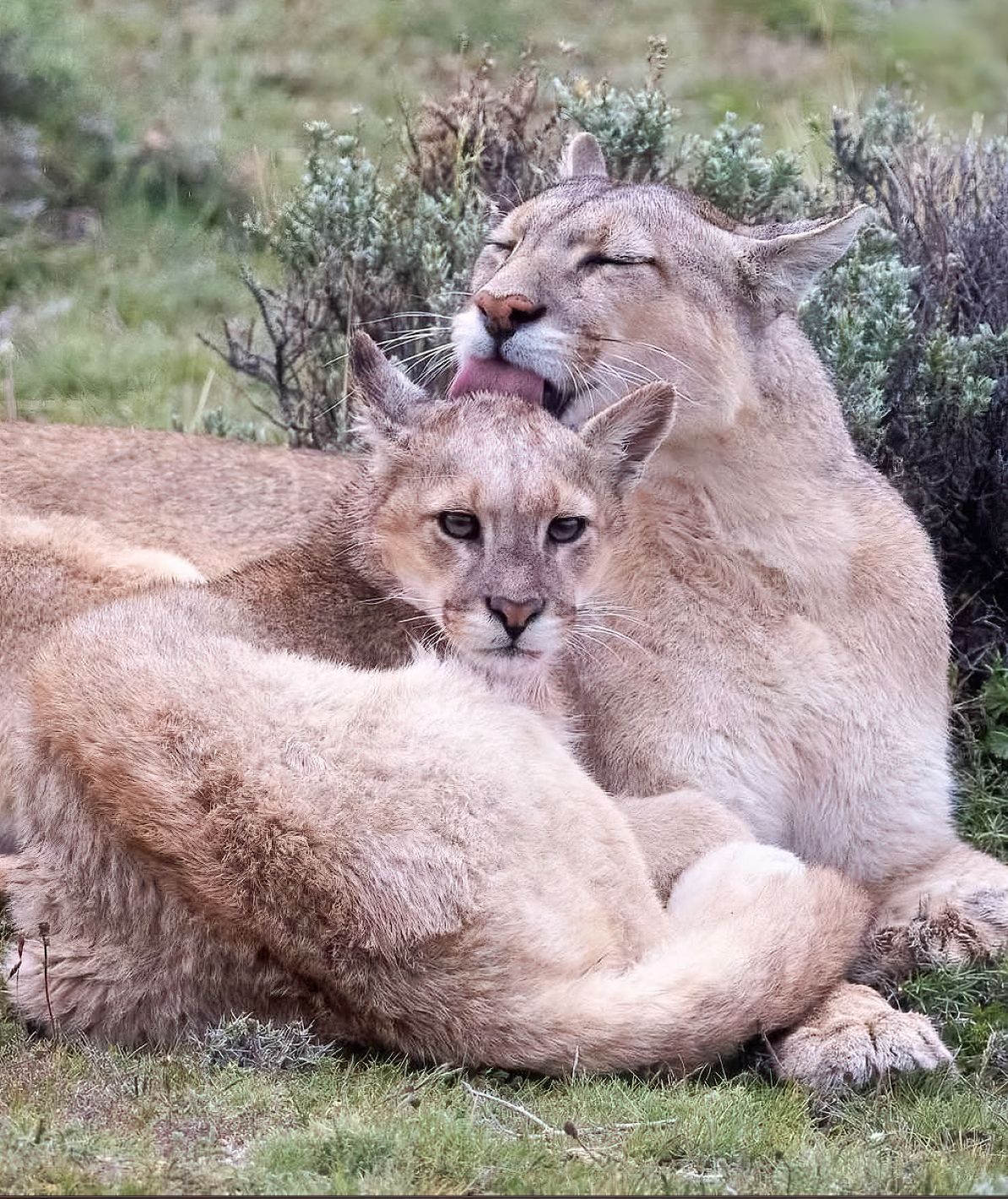

Few landscapes on Earth compress so much drama into a single view. Torres del Paine sits in the heart of Chilean Patagonia, where windswept steppe gives way to turquoise glacial lakes, and the three granite towers that give the park its name rise sheer against the sky. It's a landscape built on scale and contrast — and it happens to be the best place in the world to photograph pumas in the wild.


These rolling hills and open grasslands support one of the densest and most habituated puma populations anywhere on the planet. Here, you'll find them lounging on rocky outcrops, stalking through the scrub, hunting, and raising their young — all against a backdrop few other places can match. The park's real engine is its guanaco herds, thousands strong, whose presence across the steppe is what sustains such a healthy puma population and creates constant opportunities for real predator-prey behavior in front of the lens.


We visit in June and July, deep in the Patagonian winter, when the park empties of summer crowds and the entire landscape turns into something closer to myth: snow dusting the steppe, ice rimming the lakes, and pumas moving across a white, wind-carved world with the Torres themselves standing frozen in the distance. The light is low, long, and extraordinary for much of the day — ideal for the kind of contrast and mood that separates a good puma photograph from an unforgettable one.


Every outing is guided by professional local puma trackers who know the resident cats, their territories, and their habits intimately, giving us the best possible chance of sustained, respectful encounters — days built entirely around finding these big cats and watching them move through one of the wildest landscapes left on the continent.

Day 1 — Drive from Punta Arenas to Torres del Paine

We will depart from Punta Arenas and drive north toward Torres del Paine National Park, immersing ourselves in some of the most spectacular landscapes in Chile—and arguably one of the best places in the world to observe and photograph Pumas.


We will break up the approximately four-hour drive with an early lunch in the charming town of Puerto Natales, located on the shores of the Última Esperanza Sound and surrounded by fjords and mountains.


Upon entering the park, we will begin familiarizing ourselves with the landscapes and adjoining reserves where Pumas are regularly seen. This will be our first introduction to the area and to the wildlife inhabiting its open steppe, shrublands, and small lagoons.


As dusk approaches, we will have our first opportunity to look for Pumas. We will then return to our accommodation in the steppe for dinner and review our plans for the following days.


Overnight in Cerro Castillo.


Days 2–6 — Full Days of Puma Photography

Dawn and dusk are the most active periods for Pumas and offer the best light for photography, so we will focus our efforts during these times of day.


With the support of professional Puma trackers, we will explore the hills and valleys in search of these elusive cats. When a tracker locates an individual or family group, they will communicate its position by radio and advise us on the best way to approach, always maintaining a safe distance and ensuring that the animals are not disturbed.


The photographic opportunities in this region are exceptional, as several Puma families inhabit the area. Depending on the season, we may observe females with their cubs, Pumas stalking prey, or males patrolling the hillsides.


During the quieter hours of the day, we may explore other areas of the park in search of birds and additional wildlife. Species of particular interest include:


Andean Condor

Cinnamon-bellied Ground-Tyrant

Patagonian Mockingbird

Magellanic Woodpecker

Austral Rail, recently rediscovered in the region

Other mammals we may encounter include Southern Andean Deer, Guanaco, Patagonian Hog-nosed Skunk, Gray Fox, and Patagonian Hairy Armadillo.


Throughout our stay, there will also be abundant opportunities to photograph the dramatic landscapes of Torres del Paine and the surrounding Patagonian steppe.


Overnights in Cerro Castillo.


Day 7 — Return to Punta Arenas

On our final morning, we will enjoy breakfast at the hotel before beginning the journey back to Punta Arenas. We expect to arrive in the afternoon, allowing time to board our return flight to Santiago later that day.

A deer with antlers is laying in the grass.
A small bird with a blue beak is perched on a branch.

Additional information

  • 6 nights accommodation on Bonança Flotel - All nights of accommodation (mentioned in the itinerary) in a suite with a private bathroom and heated shower. Rooms are equipped with air conditioning.
  • All meals (except breakfast on the first day and lunch and dinner on the last day).
  • Mineral water - in 6-liter gallons, please bring your own reusable bottle.
  • Private VAN for transfers;
  • Private boat saf6-litreari 9 meters with 120hp engine - equipped with a canopy, cooler, mineral water, and radio. With a licensed pilot.
  • Full-time certified bilingual naturalist guide (CADASTUR).
  • All activities mentioned in the itinerary are included.
  • International/domestic airfare to/from Brazil, including international/domestic departure taxes.
  • Unspecified meals.
  • Any activities not mentioned.
  • Any additional taxes levied by the Brazilian government on the tourism sector in the future.
  • Any personal expenses, such as alcoholic or non-alcoholic beverages, laundry, phone calls/faxes, tips, etc.
  • Any items not mentioned in the previous section.
  • Costs arising from any changes to the itinerary/stay due to flight cancellation, inclement weather, health problems, road closures, and/or any factors beyond our control.
  • Bring Binoculars
  • Photography equipment
  • External memory for downloading pictures at night.
  • Computer to process at night.
  • Be prepared for rain and sun: a waterproof rain jacket and quick-drying clothing.
  • Bring a camera protector.
  • Bring silica gel to store the equipment at night and avoid humidity.
  • Sunscreen, hat, or cap.
  • Waterproof trekking boots or rubber boots.
  • VERY IMPORTANT: insect repellent

Consider several factors that directly influence the package price, such as quality, comfort, and safety of the operation.


We only use safari boats equipped with 4-stroke engines, which are quieter, more comfortable, and less polluting than the 2-stroke engines still quite common in the region. This type of equipment provides a more pleasant navigation and a better safari experience.


In addition, we work with experienced and duly qualified guides and pilots, complying with all legal and safety requirements in the region. This includes documentation, licenses, and regulated operations, something that unfortunately doesn't always happen in the Pantanal.


We believe these details make a difference in the quality of the experience, comfort, safety, and reliability of the operation as a whole.
LOGISTICS COULD CHANGE FOR MANY REASONS AS FOLLOWS:

We will not be liable for interruptions or inability to provide services due to circumstances beyond our control, such as severe weather conditions, park closures, transportation disruptions, terrorist incidents, fires, floods, and disease outbreaks. We appreciate your understanding in such situations and are committed to doing everything possible to reduce the impact.


Travel Insurance: We do not include travel insurance in our packages. It is strongly recommended that travellers purchase their coverage before travelling to protect against cancellations, medical emergencies, and other unexpected events.


Acceptance of Terms and Conditions: We will consider the terms accepted upon writting confirmation.


The local operator provides cancellation and out-of-peak policies.

RETORNO does not guarantee any bird species or their photography; nature is unpredictable.


RETORNO works hard to have the best logistics and protocols for safety during your visit to COLOMBIA BIRD PARADISE.