But the best Colombian macaw destinations aren't just places with long species lists. They are landscapes where fruiting trees, river corridors, open skies, trusted local access, and patient field positioning give photographers a real chance to work with light, behaviour, and clean backgrounds.
Colombia holds an exceptional mix of Amazonian, lowland, Andean, and Chocó-region habitats, each producing a very different macaw experience. A photographer seeking wide flight compositions has different needs from someone hoping for intimate canopy portraits or rare-species documentation. Choosing the right region is the first major decision.
Best Colombian destinations for macaws
The Llanos: big skies and Blue-and-yellow Macaws
The Colombian Llanos is one of the strongest choices for photographers who want macaws in flight. Vast savannas, gallery forests, moriche palm stands, and riverside woodland create open sightlines that are difficult to find in denser rainforest. Blue-and-yellow Macaws are a signature subject here, often travelling in pairs or vocal family groups between feeding and roosting areas.
This is a destination for action. Birds may appear suddenly, calling well before they cross a clearing, so have your camera settings ready before the moment arrives. The open horizon supports dramatic flight frames at sunrise and late afternoon, while palms, flowering trees, and wetland edges can provide more environmental compositions.
The Llanos also rewards photographers who appreciate a broader wildlife story. Capybaras, caimans, giant anteaters, Orinoco crocodiles in appropriate areas, and an extraordinary variety of waterbirds can fill the hours between macaw sessions. During the drier months, wildlife often concentrates around remaining water, but conditions vary substantially by ranch, river level, and annual rainfall.
The Colombian Amazon: the greatest macaw variety
For diversity, the Amazon is hard to surpass. Around Leticia, Puerto Nariño, and productive forest and river landscapes farther into the region, photographers may encounter Scarlet Macaws, Red-and-green Macaws, Blue-and-yellow Macaws, and Chestnut-fronted Macaws. Depending on the locality and forest type, other parrots and smaller macaw species may add to an already remarkable daily list.
Amazon photography asks for a different mindset than the Llanos. The forest is visually rich but operationally demanding. Canopy height, low light, humidity, rain, and dense vegetation can make close images challenging. In return, the setting lets you photograph macaws as part of an intact rainforest scene: crossing a broad river, feeding in fruiting canopy trees, or arriving noisily at a communal gathering point.
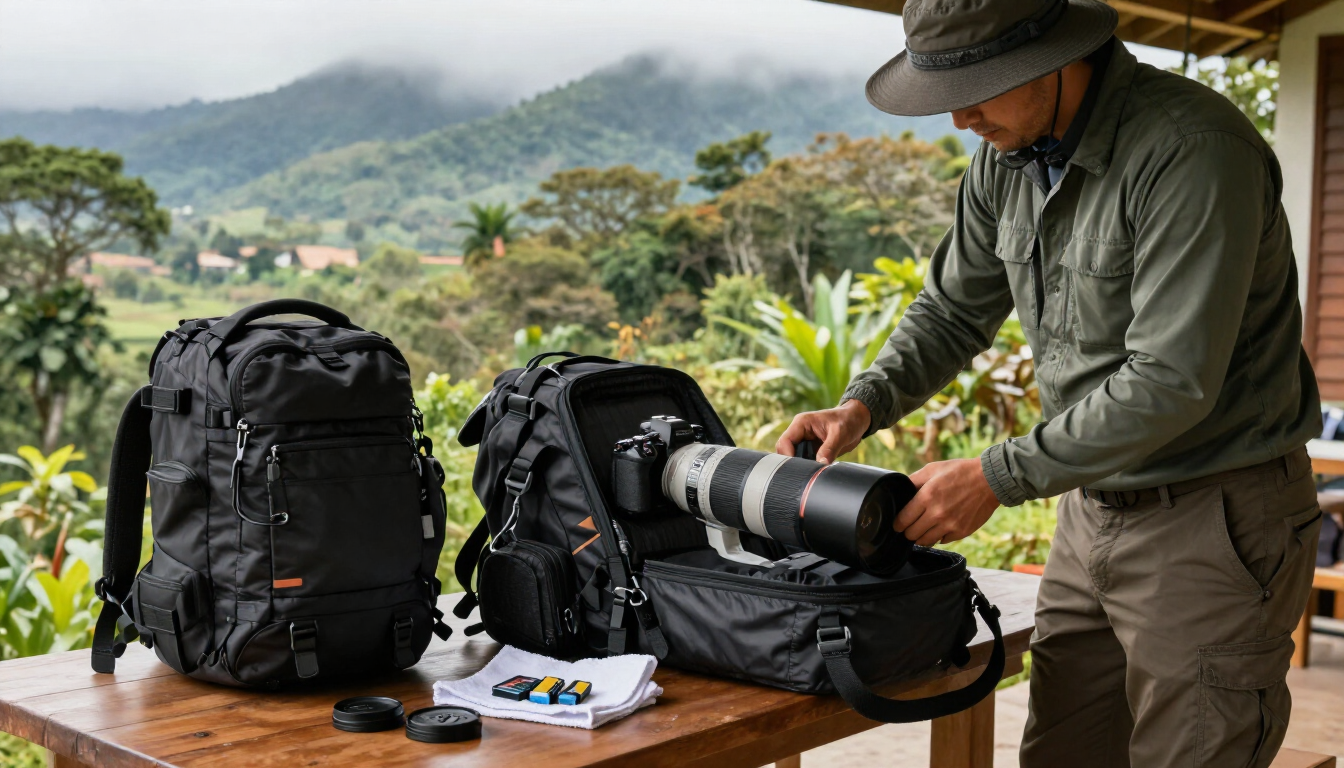
River travel is often central to access, so expect early starts and careful equipment protection. A 400mm or 500mm lens is valuable for canopy work, but a 100-400mm or 200-600mm zoom can be more practical from a moving boat or when birds suddenly fly close. Dry bags, rain covers,
silica packs, and a spare camera body are not luxuries in this climate.
The Chocó and Darién foothills: rare-species potential
The humid forests of northwestern Colombia hold some of the country’s most exciting, and most challenging, parrot opportunities. The Great Green Macaw is the headline possibility in suitable Chocó and Darién-influenced landscapes. It is a powerful conservation subject, but it should never be treated as a guaranteed checklist bird.
Great Green Macaws depend on large, mature forest trees and face habitat loss pressure across their range. Encounters are often brief, high in the canopy, or distant in flight. This is a region for photographers who value the pursuit, understand the reality of tropical field conditions, and want their travel spending to support communities protecting remaining forest.
The trade-off is clear: access can be more complex, rain is frequent, and photographic opportunities are less predictable than at a well-known lowland feeding area. Yet when preparation, local knowledge, and good fortune align, these forests can produce deeply meaningful images of one of the Neotropics’ most threatened large parrots.
Andean foothills and inter-Andean valleys: Military Macaw country
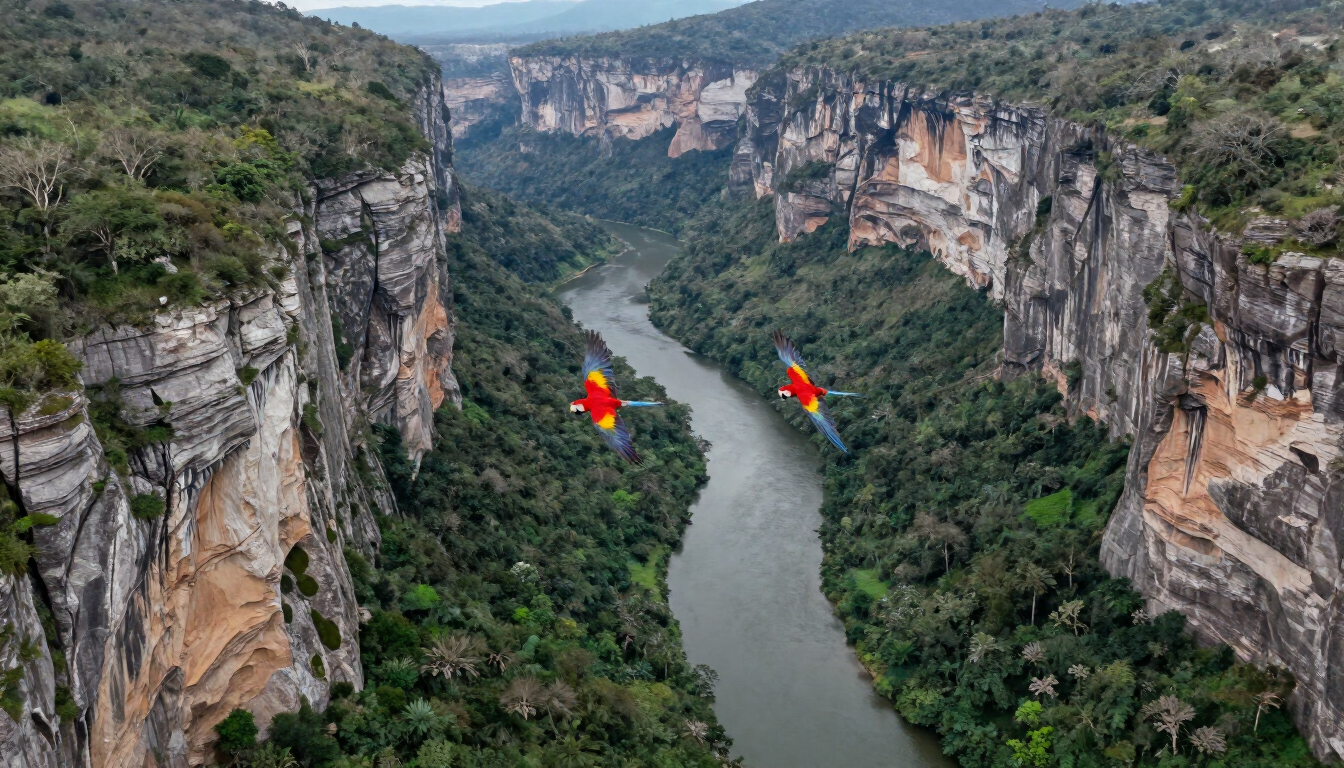
The dry-to-mesic foothills and rugged valleys of the Andes offer a different visual language for macaw photography. In carefully selected areas, Military Macaws may move along cliff faces, forested slopes, and river valleys. Their green plumage can be surprisingly difficult to expose well against bright skies or shadowed vegetation, but their habitat gives photographers the chance to make images with a genuine sense of place.
This is often less about close portraits and more about anticipation. Macaws follow traditional routes between roosting, feeding, and nesting zones, and an experienced local team can identify vantage points that respect the birds’ distance while improving the light angle. Morning is commonly productive before heat shimmer builds in broad valleys.
Terrain matters here. Some photography positions require uneven trails, steep viewpoints, or long waits in warm conditions. A lighter telephoto setup may suit travellers who prioritize mobility, while a tripod or gimbal head helps with extended flight sessions from a fixed overlook.
Timing a Colombian macaw photography trip
Macaws can be encountered year-round, but “best season” depends on the destination, target species, weather tolerance, and the behaviour you hope to photograph. Fruiting cycles drive much of their movement, and these cycles do not follow a single national calendar. A location that is excellent for feeding activity one year may be quieter the next if preferred trees fruit elsewhere.
For the Llanos, the dry season often brings more accessible roads and concentrated wildlife viewing. The green season can be spectacular for dramatic skies and fresh landscapes, though heavy rain may complicate ground travel. In the Amazon, rain is part of the experience year-round. Water levels influence boat routes, forest access, and the look of the landscape more than they determine whether macaws are present.
For serious photographers, flexibility is more valuable than chasing a rigid date. Build enough time into an itinerary to revisit a productive route, wait for better light, or respond when local guides report a fruiting tree or active flight corridor.
How to photograph macaws without disturbing them
Macaws are intelligent, social, and highly alert birds. Their calls may announce an approach, but their behaviour also changes quickly when they feel pressured. The most successful field practice is usually the least intrusive: observe from a respectful distance, remain quiet, and let birds choose whether to land, feed, or pass through.
Never request playback to draw macaws closer, and don't approach nest cavities or known roosts for a tighter frame. Those images come with too high a cost, particularly for species with small or declining populations. Also avoid drones around parrots and nesting habitat. Their noise and unfamiliar shape can disrupt normal behaviour.
Instead, work the scene. Photograph birds arriving at a fruiting tree, use a distant cliff or palm crown as context, and allow space around a bird in flight. A slightly smaller subject against a landscape often tells a more honest and more compelling story than an artificially close portrait.
Field setup for fast, colourful subjects
Macaws are bright, fast, and frequently backlit. Expose carefully for saturated yellows, reds, and blues, especially in hard tropical sun. Slight underexposure can protect highlight detail, but check your histogram rather than relying only on the rear screen. In dim forest, raising ISO is usually preferable to accepting a shutter speed too slow for flight.
For
birds in flight, start around 1/2500 second when light permits and use continuous autofocus with a flexible area mode. Practice tracking common species before the macaw moment arrives. Keep your lens hood on for rain protection and flare control, carry a microfiber cloth in an accessible pocket, and avoid changing lenses in exposed rain or dusty boat conditions unless necessary.
A local,
photographer-focused itinerary makes a meaningful difference here. At Retorno Photo Tours, we plan routes around field time, realistic travel distances, weather conditions, and the community relationships that make ethical access possible.
Choose the destination that matches your image
If your goal is clean flight photography and broad, luminous landscapes, start with the Llanos. If you want the richest macaw assemblage and can embrace humid rainforest conditions, the Amazon deserves more time than a quick add-on. If rare-species potential, conservation significance, and difficult forest work appeal to you, the Chocó and Darién foothills offer a more demanding but memorable pursuit. And for macaws framed by mountains and dramatic valleys, the Andean foothills can be the right call.
The strongest macaw photographs rarely come from rushing from one destination to another. Give one landscape enough time, listen to the people who know its seasonal rhythms, and let the birds set the pace.