
Best Camera Settings for Capturing Fast-Moving Birds in Tropical Environments
Best Camera Settings for Capturing Fast-Moving Birds in Tropical Environments
Photographing fast-moving birds in tropical environments is one of the most exciting—and technically demanding—challenges in wildlife photography. In regions like Colombia, where biodiversity is exceptionally high, photographers encounter species that move quickly, change direction unpredictably, and often appear for only a few seconds.
From darting hummingbirds to birds in flight across open wetlands, success depends on having the right camera settings ready before the action happens. Understanding how to balance shutter speed, aperture, ISO, and autofocus settings is key to capturing sharp, dynamic images in these fast-paced conditions.
Why Fast-Moving Birds Are Challenging to Photograph
Birds in tropical ecosystems are often:
- Extremely quick and agile
- Unpredictable in movement
- Active in complex environments like forests and wetlands
Lighting conditions can also vary dramatically—from bright open areas to shaded forest interiors—requiring constant adjustment of camera settings.
To succeed, photographers must be prepared to react instantly with the correct setup.
Shutter Speed: Freezing the Action
Shutter speed is the most critical setting when photographing fast-moving birds.
To freeze motion effectively:
- Use 1/1000s for moderate movement
- Use 1/2000s to 1/4000s for birds in flight
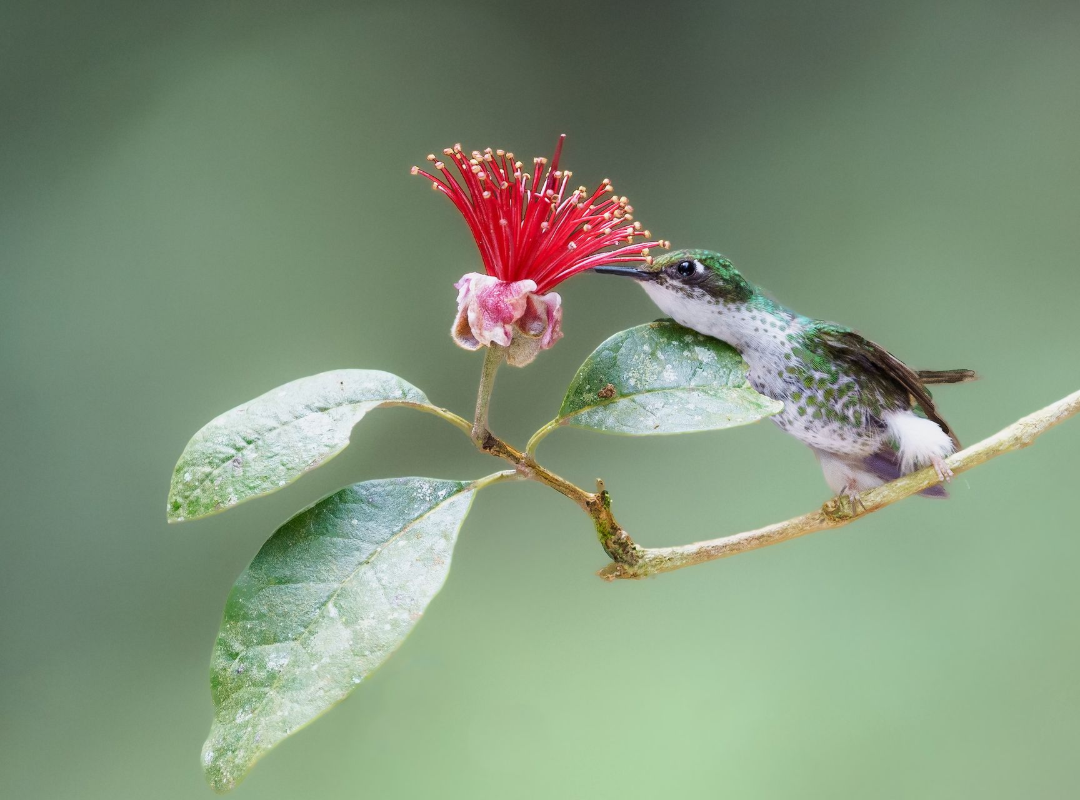
- Use even faster speeds for very rapid wing movement (such as hummingbirds)
A fast shutter speed ensures that wings, body, and fine details remain sharp.
If your shutter speed is too slow, motion blur will reduce image quality—especially in flight shots.
Aperture: Balancing Light and Depth of Field
Aperture controls how much light enters the lens and affects background blur.
Recommended settings:
- f/4 to f/6.3 for subject isolation and better light intake
- Slightly narrower apertures (e.g., f/7.1) when more depth of field is needed
In tropical environments, using a wider aperture helps maintain fast shutter speeds, especially in shaded areas.
It also creates a pleasing background blur, making the bird stand out clearly.
ISO: Adapting to Changing Light
ISO helps compensate for limited light when using fast shutter speeds.
In tropical environments:
- Use low ISO (100–400) in bright, open areas
- Increase to ISO 800–3200 or higher in forests or cloudy conditions
Modern cameras handle higher ISO well, but it’s important to find a balance between brightness and image noise.
Correct exposure is more important than keeping ISO low—underexposed images often introduce more noise during editing.
Autofocus Settings: Tracking Movement Accurately
Fast and accurate autofocus is essential for tracking birds in motion.
Best practices include:
- Use continuous autofocus (AI Servo / AF-C mode)
- Enable subject tracking or bird detection if available
- Select zone or dynamic focus area for better tracking
These settings allow your camera to continuously adjust focus as the bird moves.
Focusing on the bird’s eye or head will produce the sharpest and most impactful images.
Drive Mode: Capturing the Perfect Moment
Fast-moving birds require precise timing—but even experienced photographers cannot predict the exact perfect frame.
Using continuous burst mode (high-speed shooting) allows you to:
- Capture multiple frames per second
- Increase the chances of getting sharp wing positions
- Select the best image during editing
This is especially useful for birds in flight or rapid behavioral action.
Exposure Mode: Manual vs. Priority Modes
Choosing the right exposure mode helps maintain consistency.
Common approaches include:
- Manual mode with Auto ISO for full control over shutter speed and aperture
- Shutter priority (Tv/S mode) when focusing primarily on freezing motion
Manual mode is often preferred by experienced photographers because it prevents sudden exposure changes when backgrounds shift.
Stabilization and Handling
Even with fast shutter speeds, camera stability is important.
To improve results:
- Use proper handholding techniques
- Keep your body steady and balanced
- Use image stabilization if available
Smooth tracking is especially important for birds in flight.
Adjusting for Different Tropical Habitats
Camera settings may vary depending on the environment.
In dense forests:
- Higher ISO
- Wider apertures
- Slightly lower shutter speeds if necessary
In open wetlands or coastal areas:
- Lower ISO
- Faster shutter speeds
- More consistent lighting
Adapting quickly to these conditions is essential for success.
Anticipating Bird Movement
Settings alone are not enough—anticipation plays a major role.
Experienced photographers:
- Watch for patterns in bird behavior
- Predict takeoff or landing moments
- Pre-focus on areas where birds are likely to appear
Combining technical preparation with observation leads to better results.
Practice and Consistency
Capturing fast-moving birds requires practice.
The more time you spend shooting:
- The faster you adjust settings instinctively
- The better you track movement
- The more consistent your results become
Consistency comes from repetition and real-world experience.
Learning in the Field with Expert Guidance
Guided photography tours provide an excellent opportunity to refine camera settings in real conditions.
Experienced guides can help you:
- Adjust settings based on specific species and environments
- Position yourself for optimal shooting angles
- Improve your timing and technique
This hands-on learning accelerates your progress significantly.
Experience Bird Photography in Colombia with Retorno Photo Tours
Retorno Photo Tours offers specialized bird photography experiences in Colombia, designed to help photographers master challenging conditions like fast-moving subjects.
Our tours provide:
- Access to diverse tropical ecosystems
- Expert guidance on camera settings and field techniques
- Small group sizes for better positioning and learning
- Ethical wildlife photography practices
Whether you are a beginner or an advanced photographer, our tours help you capture dynamic and high-quality images of tropical birds.
If you would like to improve your bird photography skills, we invite you to contact us through our website.
With the right camera settings and field experience, you can confidently capture sharp, detailed images of even the fastest birds in tropical environments.