When a Hummingbird Becomes a Business
I've watched this story unfold many times across Ecuador, and it never stops moving me.
By Juan Bahamon: https://www.facebook.com/share/1HTqw8xf9D/?mibextid=wwXIfr
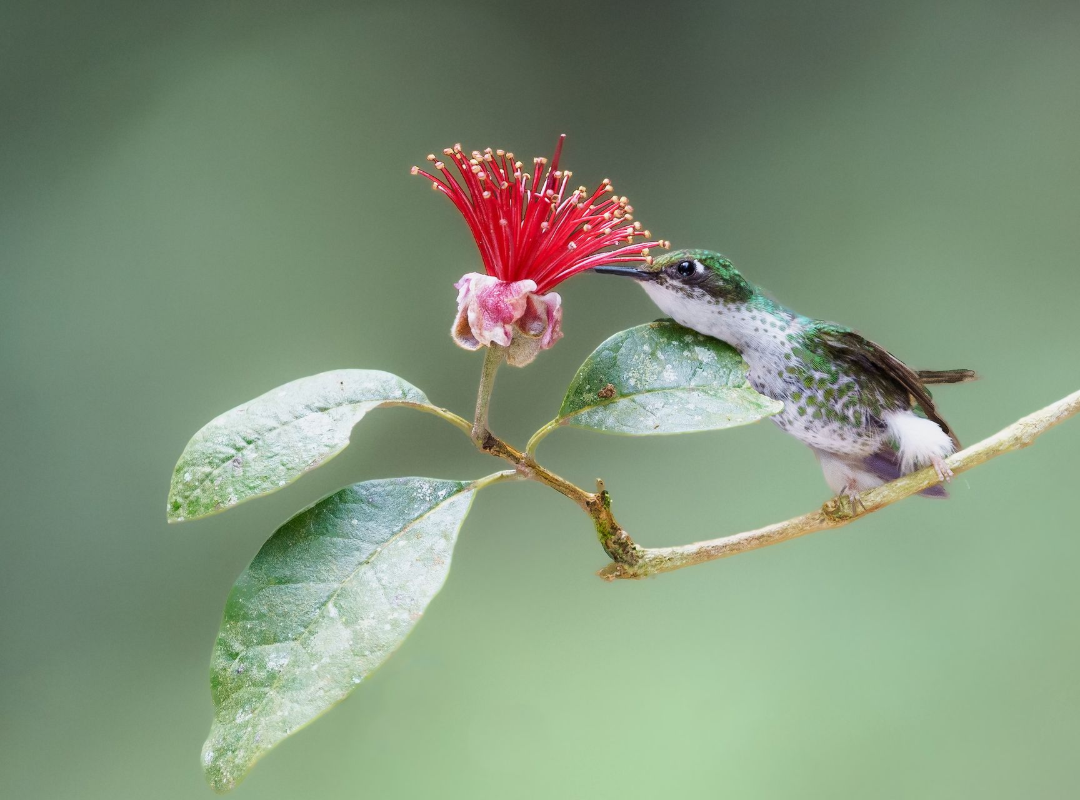
It usually starts the same way: a humble farming family living beside a patch of forest. A bird guide passes through, looks at the habitat, and realizes it's perfect for one particular hummingbird — ideally one that birders are desperate to see.
"Why don't you put up a feeder?"
So the family hangs a simple plastic feeder, fills it with sugar water, plants a few nectar-rich flowers nearby… and waits.
Days pass. Maybe weeks.
Then, one morning, the first hummingbird arrives.
If it turns out to be a rare species, that small experiment can suddenly take flight in ways no one expected.
One guide tells another. Someone posts a photo. Messages start circulating on WhatsApp. And before long, birders and photographers are showing up at a place that, just months earlier, nobody outside the community had ever heard of.
The family starts charging five or ten dollars per visitor.
It might not sound like much, but in rural Ecuador, those few dollars start changing everything. More feeders go up. They get cleaned regularly. More flowers get planted. The forest itself takes on new value, because the family has just learned something powerful:
*A living hummingbird can generate income.*
I've seen what happens next, again and again.
First comes a clean bathroom for visitors. Then, maybe, a small shelter, some chairs, coffee, a bite to eat. Reliable internet arrives, so visitors can stay connected and — of course — immediately share the hummingbird they just photographed with the rest of the world.
But the transformation that moves me most is the one you see in the children.
Their clothes change. Their opportunities change. Some families have managed to send their kids to private schools in the capital. I even know one man whose small birding venture eventually helped send his son to study in the United States.
Think about that arc for a second: from a plastic feeder hanging beside a modest farmhouse, to a son studying abroad.
To me, that's bird tourism at its very best.
As photographers and birders, when we visit a place like this, we might think we're simply paying five or ten dollars to see or photograph a beautiful hummingbird. Nothing more. But that money can become part of something much bigger. A small family enterprise can, little by little, lift a household out of poverty and into a far more comfortable, middle-class life.
And at the same time, the hummingbirds, the flowers, the trees, and the forest around that family become resources worth protecting — not in the abstract, but because that family's livelihood now depends on them.
Sometimes conservation doesn't start with a government program, a scientific paper, or a major international organization.
Sometimes it starts with a farmer, a bird guide, a feeder full of sugar water…
and one hummingbird willing to show up.
---
This is exactly the kind of transformation we work toward at Retorno Photo Tours — community-based tourism where every eye-level hide, every feeder station, and every well-managed private reserve becomes both a livelihood and a reason to protect the forest around it. It's a model we see repeating itself across Colombia, one of the most biodiverse countries on earth for birds, and it's at the heart of why we do this work.