
Why Panama Is Becoming the Hub for Tangara-Style Bird Photography Expeditions
Why Panama Is Becoming the Hub for Tangara-Style Bird Photography Expeditions
Panama has quietly become one of the most influential destinations in modern bird photography, and nowhere is this transformation more visible than in the evolution of Tangara-style bird photography expeditions. Known for fast-paced, color-rich, perch-based setups and ultra-efficient species production, Tangara-style shooting has become the gold standard for photographers who want both speed and beauty in their images.
While countries like Colombia, Ecuador, and Peru have their legendary hotspots, Panama has emerged as a new powerhouse—offering accessibility, biodiversity, and logistical ease that few other countries can match. Photographers are discovering that Panama isn’t simply “another Neotropical destination,” but the new hub for a refined, photo-focused style of birding that blends professional-grade setups with reliable, day-after-day success.
This article explains why Panama is taking the lead, what makes its bird photography scene so unique, and how Tangara-style expeditions have transformed the country into one of the most productive bird photography hubs in the Americas.
The Rise of Tangara-Style Photography in Panama
Tangara photography—named after the colorful tanagers (family Thraupidae)—began as a focused approach to capturing brightly colored Neotropical birds at close range. The style prioritizes:
- controlled perches
- clean backgrounds
- feeding or fruiting stations
- low-stress conditions for birds
- high-volume photographic productivity
Photographers love it because it blends creativity and predictability. You control the visual elements—the perch, angle, light orientation—but the experience is still wild, natural, and authentic.
While this approach originated in Andean regions of Colombia and Ecuador, Panama has mastered it in a new way. The country offers fast access, shorter travel distances, and highly concentrated biodiversity, enabling photographers to produce exceptional images in less time.
1. Panama’s Geographic Sweet Spot: The Bridge of the Americas
Panama sits at a biological crossroads. As the land bridge between North and South America, it hosts species from both continents while maintaining its own endemic birdlife.
This means photographers can expect a species set that includes:
- Central American specialties
- South American migrants and residents
- Endemic subspecies unique to the Panama Canal zone and the Darién region
No other country has this particular blend. For Tangara-style photo expeditions, this translates into:
Higher diversity per location — fewer long drives — more time behind the camera.
In the space of one morning, you might photograph:
- Blue-gray Tanager
- Crimson-backed Tanager
- Golden-hooded Tanager
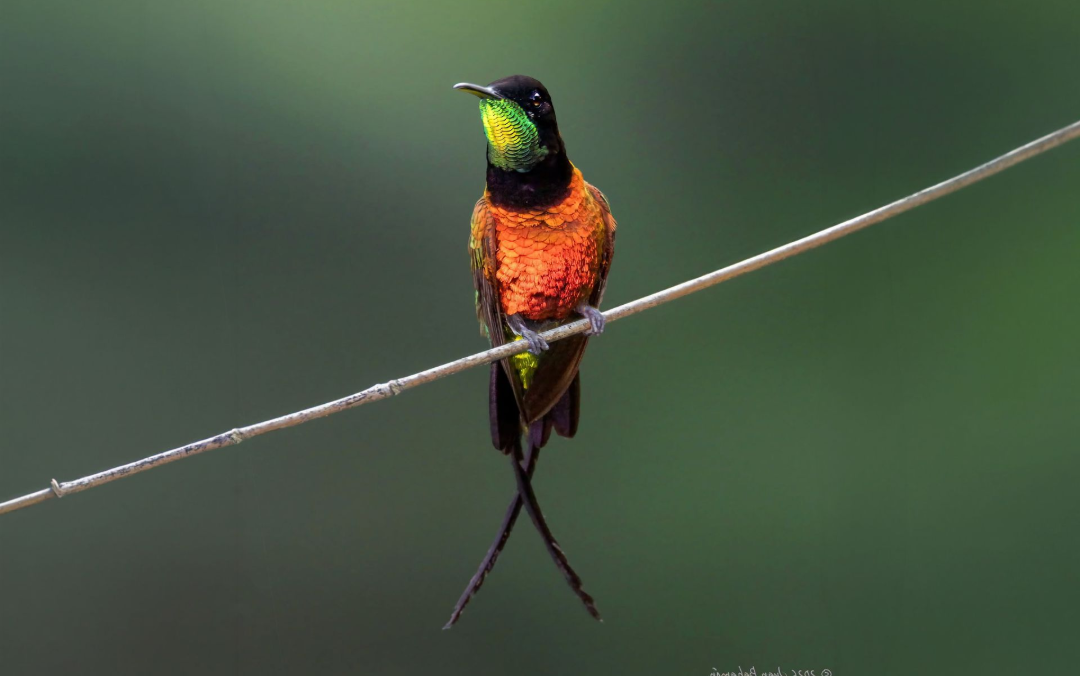
- Flame-rumped Tanager
- Red-legged Honeycreeper
- Thick-billed Euphonia
—all from one carefully designed photo station.
2. Reliable Weather and Predictable Light
Panama’s climate gives photographers something rare in tropical birding: consistent light and stable seasons. Even during the green season, rain tends to follow predictable afternoon patterns, making morning photography extremely reliable.
For Tangara-style shooting, this matters because:
- Perch setups rely on controlled light.
- Cloud cover creates ideal softbox conditions.
- Harsh midday sun is easily avoided with flexible daily schedules.
While photographers in the Andes often battle fog and mist, Panama’s lowland and foothill ecosystems avoid many of these limitations.
3. Infrastructure Built for Photographers
Panama’s tourism infrastructure is one of the strongest in Central America. Roads, lodges, and regional airports are modern, safe, and conveniently connected.
What makes Panama special, however, is how many lodges now cater specifically to photographers, not just birders.
This includes:
- Dedicated photography perches
- Controlled fruit-feeding stations
- Multi-angle shooting platforms
- Background-designed environments (clean bokeh, no clutter)
- Photographer-friendly schedule flexibility
- Professional guides trained for photography, not just birding
Panama is evolving faster than nearly any other country in integrating true photography-based design into its ecotourism model.
4. Short Travel Distances = More Productivity
In large South American countries—Brazil, Colombia, Peru, and Ecuador—travel time between birding regions can be significant. In Panama, distances are short, and wildlife regions cluster around key geographic zones.
For example:
- The Panama Canal zone
- El Valle de Antón
- Darién region
- Chiriquí highlands
- Bocas del Toro foothills
Most of these can be accessed within hours of Panama City, allowing photographers to experience rainforest, cloud forest, wetlands, and foothill ecosystems in a single trip, without losing days to transit.
This condensed geography is one of the top reasons Tangara-style expeditions thrive here.
5. Panama’s Birding Culture Is Expanding Rapidly
Panama is becoming a magnet for international photographers because:
- Young local guides are becoming photo specialists.
- New reserves are opening with photography infrastructure.
- Community-based tourism is integrating perch-based photography.
- Conservation projects now include photo-friendly visitor platforms.
The synergy between ecotourism, conservation, and photography is producing a modern, sustainable model. Instead of trying to compete with larger countries, Panama found its niche: high-quality, precision-designed photography experiences.
6. Iconic Species for Tangara-Style Photography
Although “Tangara-style” refers broadly to brightly colored birds, Panama’s species list delivers some of the most charismatic photography targets in the Neotropics.
Standout highlights include:
- Golden-hooded Tanager
- Crimson-backed Tanager
- Emerald Tanager (in foothill zones)
- Silver-throated Tanager
- Bay-headed Tanager
- Red-capped Manakin (a favorite due to its unique display behaviour)
- Blue Dacnis
- Shining Honeycreeper
What makes Panama particularly exciting is the density of photo-friendly sites. Photographers can shoot up to 30–60 species in a few days, depending on itinerary and region.
7. The Darién: A New Frontier for Bird Photographers
Although famous for its wilderness and mega-fauna, the Darién is gaining recognition as a new hotspot for professional bird photography.
Features include:
- Carefully developed perches
- Rich feeder stations in community ecotourism zones
- Rare tanagers and honeycreepers
- High biodiversity with low disturbance
- Excellent guide teams trained in photography logistics
For Tangara-style expeditions, the Darién offers the combination of rare species, pristine forest, and controlled shooting environments—a trifecta hard to match anywhere else in the Neotropics.
8. Why Panama Outperforms Larger Countries for Tangara-Style Expeditions
Panama has become the hub because it offers what the modern wildlife photographer values most:
✔ High species diversity
✔ Short travel distances
✔ Photo-designed infrastructure
✔ Stable weather
✔ Accessible habitats
✔ Safety and comfort
Instead of trying to compete with Colombia’s megadiversity or Brazil’s massive ecosystems, Panama refined the experience: fewer logistics, more shooting, higher productivity.
This optimization makes it uniquely powerful for photographers who want to practice Tangara-style shooting without losing valuable time to long transfers, elevation changes, or unpredictable mountain weather.
9. Community-Driven Photography Projects
One of the strongest movements in Panama’s ecotourism boom is how local communities are creating their own photography models.
In several regions, residents have transformed:
- backyard spaces
- small private reserves
- agricultural borders
- foothill forest edges
into flourishing bird photography platforms.
This generates sustainable income while protecting habitat—an ideal model of Keeping nature tours that balances tourism and conservation. Photographers benefit from intimate, well-maintained setups, while communities gain long-term revenue that reinforces protection of forests and wildlife.
10. Panama’s Growing Influence on International Photography Trends
International tour operators, professional photographers, and birding brands increasingly refer to Panama as one of the best destinations for producing clean, vibrant, high-volume bird imagery.
The country’s success is shaping global expectations. More photographers now:
- choose Panama as their first tropical photography destination
- train in Panama to master Neotropical bird photography
- use Panama to build portfolio images for competitions
- return for specialized Tangara-style workshops
The effect is clear: Panama is no longer emerging—it's leading.
Final Thoughts
Panama has become a hub for Tangara-style bird photography because it offers consistency, creativity, and comfort without sacrificing true wilderness. Its blend of infrastructure, biodiversity, and accessibility places it at the center of a new wave of bird photography tourism—one rooted in precision, artistry, and meaningful connection with nature.
For photographers seeking fast-paced, colorful, and highly productive bird photography experiences, Panama is one of the strongest destinations anywhere in the Americas.
If you want to experience the brightest tanagers, the most efficient setups, and the refined shooting style that defines Tangaer photo tours across the Neotropics, consider joining one of our specialized South American photography programs. Explore upcoming departures through our scheduled nature & wildlife tours at Retorno Photo Tours — crafted for photographers who want the best possible images in the best possible locations.