
Cats of South America for Wildlife Photographers
South America holds an extraordinary range of wild felines, from the powerful jaguar to small, rarely seen cats that can weigh less than a house cat.
A jaguar stepping from a flooded Pantanal forest or an ocelot appearing silently beside an Amazon trail can change the pace of an entire expedition. The cats of South America are among the continent’s most compelling photographic subjects, but they are not animals to collect on a checklist. Most are nocturnal, exceptionally alert, thinly distributed, and dependent on intact habitat. Photographing one well is usually the result of patient fieldcraft, local knowledge, and a great deal of respect for the animal’s space.
For serious wildlife photographers, that difficulty is part of the appeal. A memorable frame may come after several quiet mornings in a riverboat, a long stakeout beside a fruiting tree, or a carefully timed night drive with a specialist guide. The goal is not simply proof that a cat was there. It is an image that shows its character, its habitat, and the wild landscape that supports it.
The big cats and small cats of South America
South America holds an extraordinary range of wild felines, from the powerful jaguar to small, rarely seen cats that can weigh less than a house cat. Taxonomy continues to evolve, particularly among tiger cats and pampas cats, so species totals can differ between field guides and scientific authorities. For photographers, the more useful truth is that each region offers a different set of possibilities, conditions, and ethical considerations.
Jaguar: the continent’s defining feline
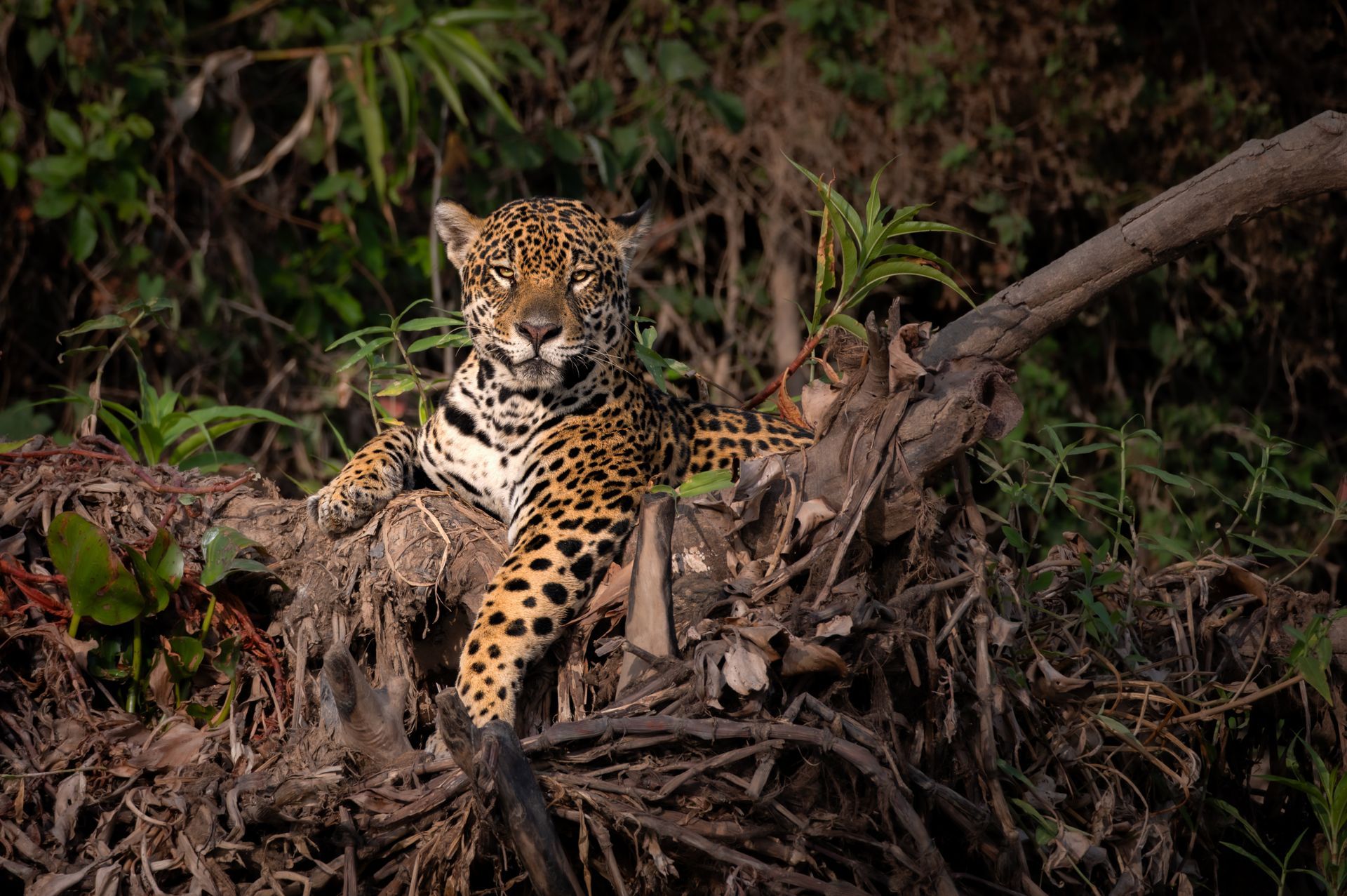
The jaguar is the largest cat in the Americas and the photographic prize most travelers associate with South American wildlife. Its rosettes, broad head, and compact power make it unmistakable. Unlike leopards, jaguars often have a central spot within their rosettes, though a clear view is never guaranteed in the field.
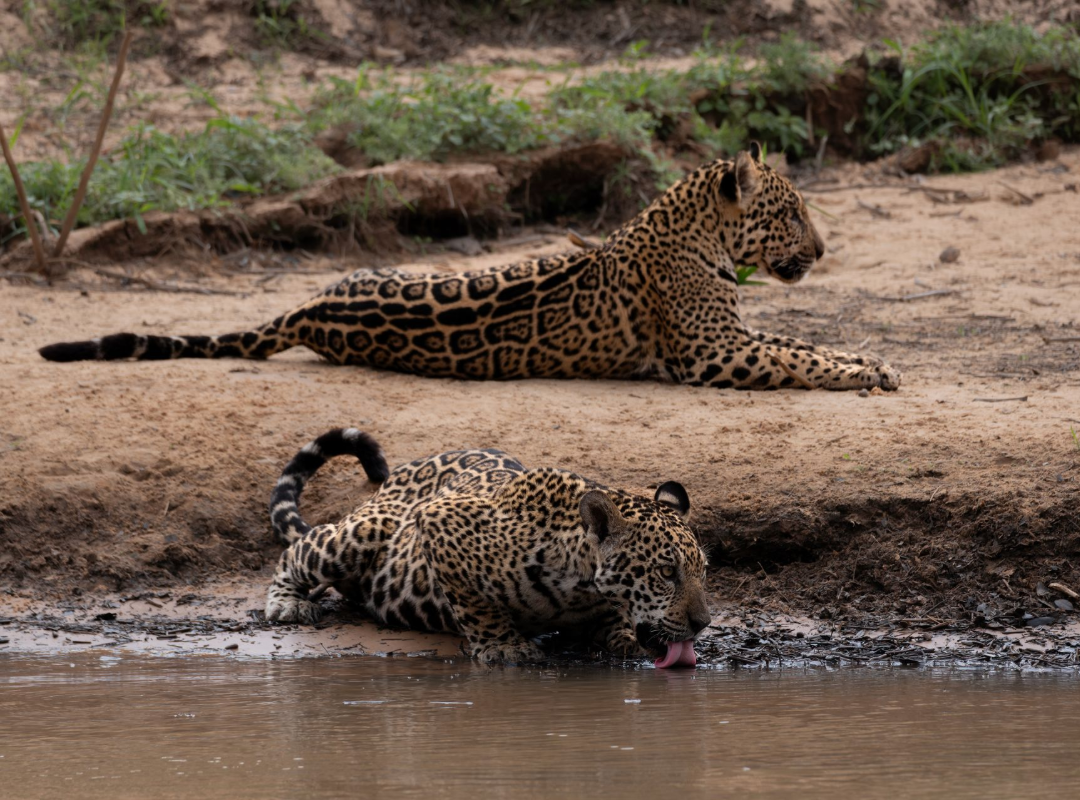
The Brazilian Pantanal is widely regarded as the most reliable place to photograph wild jaguars from a boat. During the dry season, river edges concentrate wildlife, and experienced boat teams can work slowly and position respectfully when a cat appears along the bank. The setting matters as much as the portrait: a jaguar reflected in still water, moving through tangled roots, or watching capybaras across a channel tells a fuller story than a tight headshot alone.
Jaguars also occur in Colombia’s Amazon, Orinoquía, Chocó, Caribbean dry forests, and other connected landscapes. There, however, sightings are much less predictable. Their presence is a sign of healthy habitat, but a jaguar expedition outside the Pantanal should be approached as broader wildlife photography with a real possibility of an exceptional encounter, not a guaranteed jaguar assignment.
Puma: elusive, adaptable, and remarkably difficult
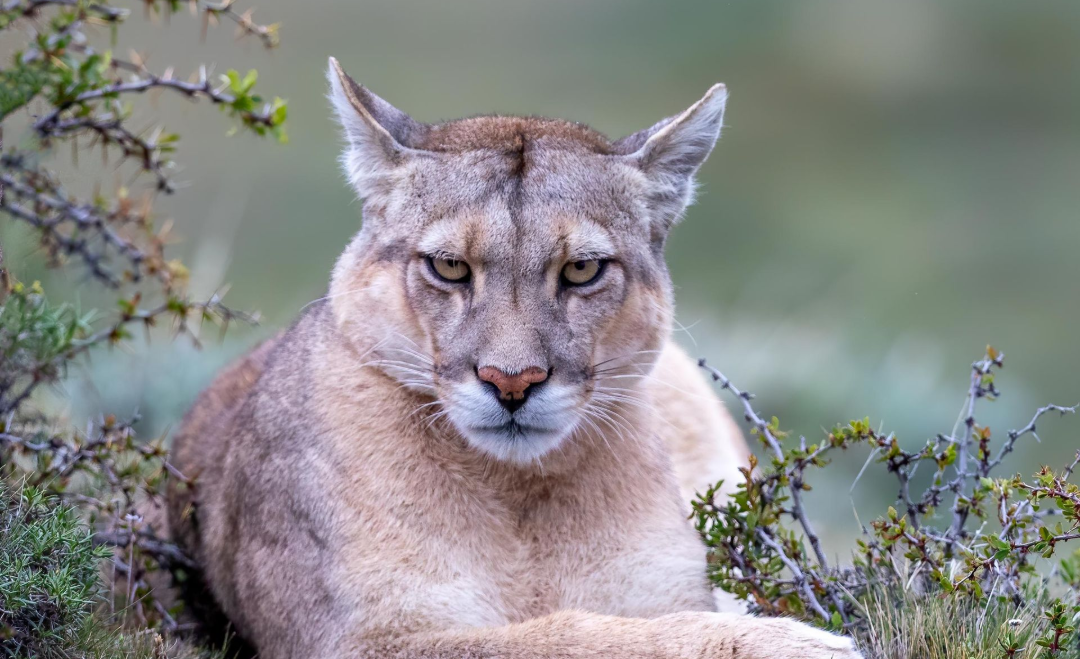
Pumas have one of the broadest distributions of any American carnivore, ranging from sea level to high mountains. Yet their wide range does not make them easy to photograph. They move quietly, often travel at low light, and can disappear into terrain that seems far too open to conceal a large predator.
In South America, puma photography depends heavily on location and access. Open Patagonian landscapes can offer visibility that dense tropical forest does not, while high Andean areas present entirely different challenges: thin air, severe weather, long distances, and animals adapted to sparse cover. A puma image can be powerful because it reveals this adaptability, whether the cat is crossing a grassland ridge or moving through a rocky mountain basin.
Ocelots, margays, and the forest specialists
Ocelots are perhaps the most familiar of the smaller spotted cats. They inhabit a wide range of forested and wetland environments, including lowland rainforest, gallery forest, mangroves, and dense tropical woodland. Their rich markings photograph beautifully under soft forest light, but their habit of moving at dusk or after dark makes a natural encounter rare.
Margays are even more specialized for forest life. With large eyes, a long tail, and remarkable climbing ability, they are built for the canopy and understory rather than open ground. Jaguarundis, by contrast, have a long-bodied, low-slung appearance and solid-colored coats that range from dark gray to reddish brown. They can be active by day, but they remain difficult to see because they move quickly through cover.
Northern tiger cats, southern tiger cats, Geoffroy’s cats, kodkods, and the cats grouped within the pampas cat complex each bring their own regional stories. Some are associated with cloud forest, scrub, grassland, or temperate woodland. Several are poorly known in the wild and should never be treated as easy targets. Their rarity makes ethical restraint more valuable, not less.
The rarest targets require a different mindset
The Andean mountain cat is one of the world’s least frequently seen wild cats. It lives at high elevations in the central Andes, often in harsh, rocky country where weather changes fast and access is demanding. Its thick coat and long, banded tail are striking, but its conservation status and scarcity place it firmly in the category of an animal to respect from a distance.
For a photographer, this means accepting that a well-run search may yield tracks, prey signs, landscape images, and a deeper understanding of the ecosystem without producing a cat photograph. That is not a failed expedition. In fact, this attitude is essential when working around vulnerable species. The welfare of the animal must remain more important than a portfolio image.
What makes cat photography different
Bird photography often rewards rapid response and constant scanning. Wild cat photography is more frequently about anticipation. You may need to read fresh tracks on a riverbank, watch the behavior of monkeys or birds, notice a recently used game trail, or remain still for an extended period because a guide understands where a cat is likely to emerge.
Light is another trade-off. Many felines are active in the first and last minutes of daylight, when a long lens, steady support, and disciplined exposure choices become essential. In dense forest, ISO performance and autofocus reliability can matter more than extreme focal length. On open riverbanks, a 400mm to 600mm lens can produce stronger behavior images while keeping the boat or vehicle at a responsible distance.
Bring equipment that supports patience rather than complicates it:
- A long telephoto lens, ideally 400mm or longer, plus a shorter lens for habitat and close encounters.
- A camera body with dependable high-ISO performance and strong subject tracking in low contrast.
- A beanbag for boat work or a stable monopod for vehicle-based photography.
- Rain protection, spare batteries, lens cloths, and dry bags for humid forest or wetland conditions.
- Quiet, neutral clothing suited to local temperatures, along with footwear appropriate for muddy trails or rocky terrain.
Do not rely on flash for close wild cat encounters, especially at night. It can alter behavior, create stress, and produce images that feel disconnected from the animal’s natural world. Red-filtered lights, responsible spotlighting practices where permitted, and guides who understand local regulations are far better foundations for nocturnal observation.
Ethical encounters create better photographs
The best feline photography begins long before the shutter is pressed. It begins with choosing operators and local teams that do not bait predators, crowd animals, block travel routes, or pressure a cat to move for the benefit of a group. Playback and artificial attractants can be especially disruptive for secretive small cats and should not be used casually.
Distance is not a fixed number. It depends on the species, terrain, vehicle position, and the animal’s behavior. A relaxed jaguar continuing to walk, scent-mark, rest, or hunt naturally is offering a better photographic opportunity than an animal staring tensely at the boat that has approached too closely. If a cat changes direction, flattens its ears, freezes repeatedly, or abandons cover because of your presence, the group is too close.
There is also a conservation dimension. Cat-focused tourism can help protect habitat when it supports local employment, community-owned services, trained guides, and long-term incentives to keep forests, wetlands, and wildlife corridors intact. In Colombia, many of the landscapes that hold elusive cats are also home to extraordinary birds, amphibians, primates, and culturally rich rural communities. Thoughtful travel can direct real value toward those places without reducing wildlife to a product.
Choosing the right expedition for your goals
A photographer hoping for reliable jaguar opportunities should consider a focused Pantanal itinerary during the season when river-based wildlife viewing is strongest. Someone drawn to Colombia’s forests may be better served by a broad biodiversity expedition that prioritizes birds, primates, reptiles, and mammals while treating a cat encounter as a rare bonus.
Private itineraries can be particularly useful when feline photography is a central goal. They allow more flexibility for early departures, late returns, extended time in productive habitat, and accommodation choices that reduce transfer time. Still, customization cannot remove the uncertainty of wild animals. A trustworthy guide will be clear about what is likely, what is possible, and what should never be promised.
A close encounter with a South American wild cat is unforgettable precisely because it is not staged. Travel prepared, work with people who know the territory, and give the animal room to remain fully wild. The resulting photograph may be rare, but the experience behind it will be far more meaningful.
Ready to photograph Colombia?
Join us on a bird or wildlife photography tour designed around great photography, special locations, and unique experiences in Colombia.
Explore our upcoming tours:
www.retornophototours.com
Have a question or want to plan a private tour?
Email us at
dcasas@retornophototours.com
WhatsApp: +57 305298600
Let’s plan your next photography adventure in Colombia.
—
David Casas
Founder & Director | Retorno Photo Tours
Bird & Wildlife Photography Tours in Colombia
Scheduled Tours
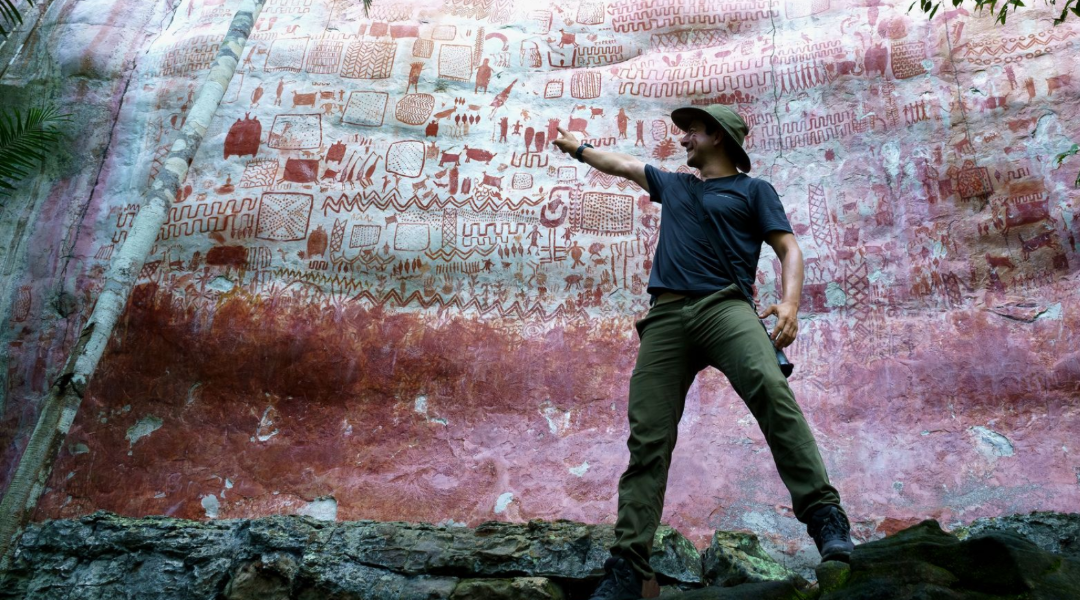
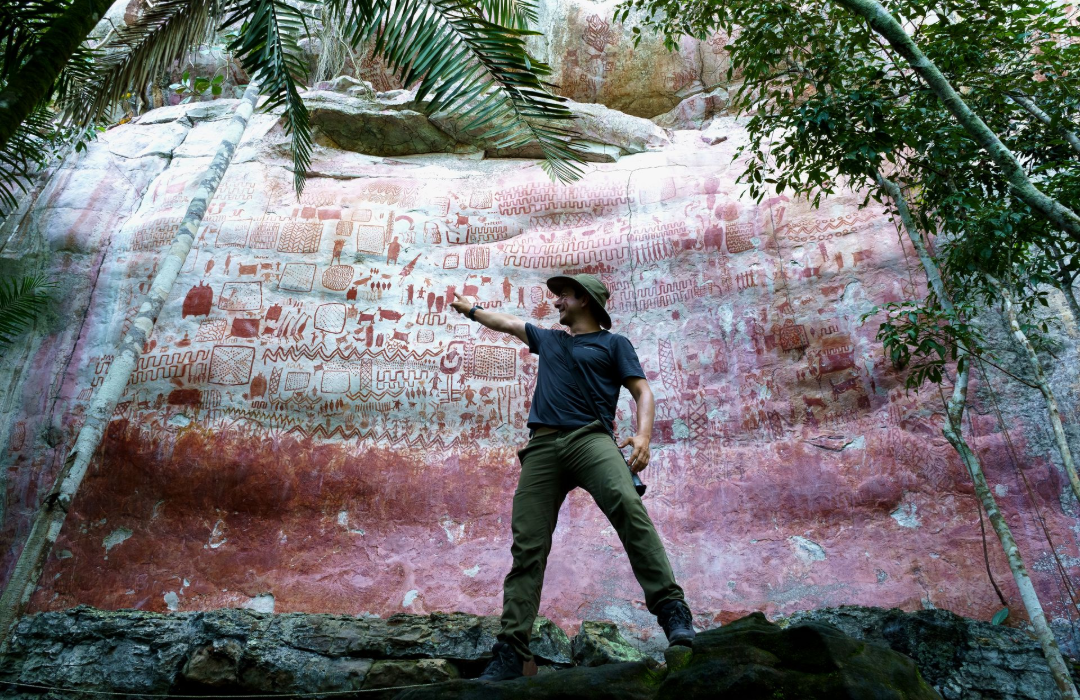
The road to Chiribiquete, Colombia's Western Amazon.
Jaguars Safari, Pantanal - Brazil.
Amazon's Guiana Shield Specialties. Mitu-Vaupes.
Emblematic Birds Photo Tour, Coffee Triangle.