
Harpy Eagle Photography Tours: Tracking One of the World’s Most Powerful Raptors
Harpy Eagle Photography Tours: Tracking One of the World’s Most Powerful Raptors
Among all birds of prey, none command the same level of awe as the Harpy Eagle. Towering in presence, immense in strength, and shrouded in mystery, this rainforest giant stands at the top of the avian food chain. Photographing a Harpy Eagle in the wild is not simply a photographic achievement—it is a profound encounter with one of nature’s most powerful living symbols. In Colombia, where vast rainforests still stretch unbroken across remote landscapes, Harpy Eagle photography tours represent one of the most elite and meaningful wildlife photography experiences on Earth.
Harpy Eagle photography is not about convenience or quick sightings. It is about patience, respect, ecological understanding, and ethical responsibility. Colombia remains one of the last countries where photographers can pursue this legendary raptor in a way that honors both the bird and its environment, making it a premier destination for serious wildlife photographers.
The Harpy Eagle: A Predator Like No Other
The Harpy Eagle is one of the heaviest and most powerful eagles in the world. Females, significantly larger than males, can weigh up to nine kilograms and possess talons as large as a grizzly bear’s claws. These talons are capable of exerting crushing force, allowing the eagle to hunt large arboreal mammals such as sloths and monkeys.
Visually, the Harpy Eagle is unmistakable. Its broad wings, muscular body, slate-gray plumage, and distinctive double crest give it an almost mythical appearance. When perched, it exudes dominance; when airborne, it moves with surprising agility through dense forest canopies.
For photographers, the Harpy Eagle represents the pinnacle of raptor photography. Capturing its presence is about more than sharp focus—it is about portraying power, scale, and wilderness.
Why Harpy Eagle Photography Is So Rare
Unlike open-country raptors, Harpy Eagles live almost exclusively in dense tropical rainforest. They are naturally elusive, occupying enormous territories that can span tens of square kilometers. They hunt silently and perch for long periods, often remaining unseen even when nearby.
This rarity is precisely what makes Harpy Eagle photography so special. Encounters cannot be rushed or forced. Ethical Harpy Eagle photography relies on deep ecological knowledge, careful timing, and long-term conservation collaboration.
Colombia’s intact rainforests provide one of the last realistic opportunities to photograph Harpy Eagles responsibly, without stressing the birds or disrupting their behavior.
Colombia: A Stronghold for Harpy Eagle Conservation
Colombia is one of the most important countries in the world for Harpy Eagle survival. Its extensive lowland rainforests, particularly in remote regions, still offer the towering emergent trees required for nesting and hunting.
Unlike heavily fragmented forests elsewhere, Colombia maintains large, connected habitats where Harpy Eagles can breed successfully. These ecosystems support healthy prey populations and provide the vertical forest structure Harpy Eagles depend on.
For photographers, this means that Colombia is not just a destination—it is a living conservation stronghold where ethical photography actively supports species survival.
Understanding Harpy Eagle Behavior in the Wild
Successful Harpy Eagle photography begins with understanding behavior rather than chasing sightings. Harpy Eagles are territorial birds with long breeding cycles. Pairs may use the same nesting tree for many years, raising a single chick over an extended period.
Activity patterns are subtle. Harpy Eagles often remain perched for hours, scanning the forest canopy. Early morning and late afternoon are typically the most active periods, when adults may move between perches or return to known areas.
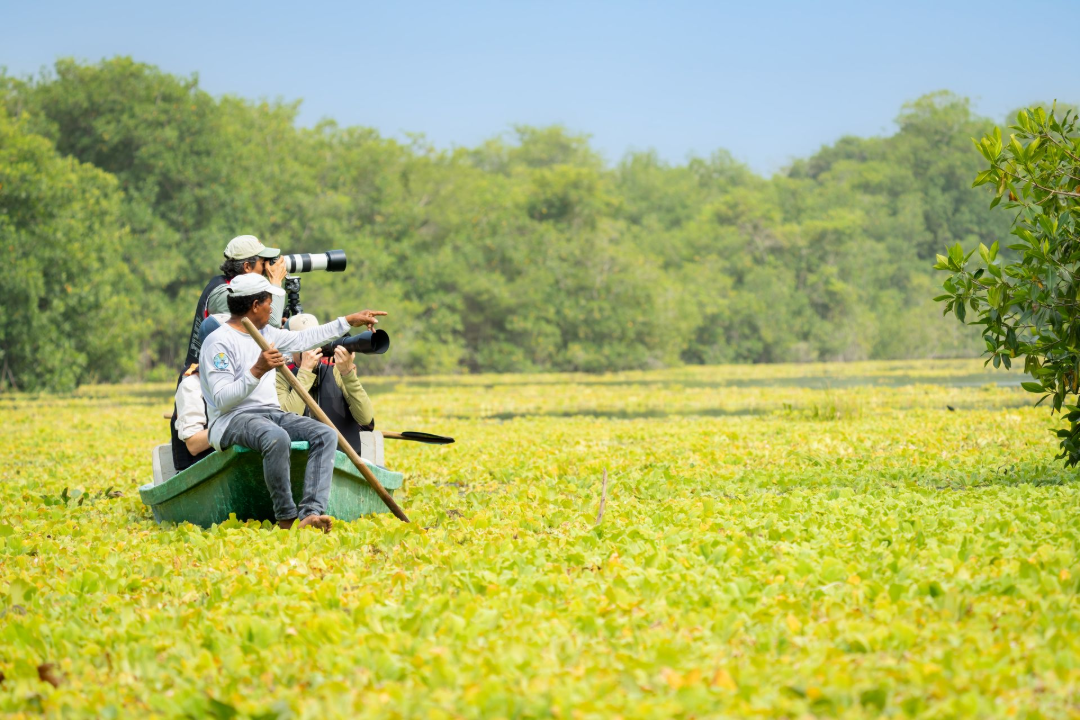
Photography tours focus on observation rather than intrusion. By remaining still, silent, and patient, photographers can witness authentic Harpy Eagle behavior—moments that cannot be staged or rushed.
The Importance of Habitat in Harpy Eagle Photography
A Harpy Eagle without its forest is an incomplete story. Photographing this species requires showing its relationship to the rainforest—towering trees, layered canopy, and filtered light.
Colombia’s rainforests provide dramatic photographic settings where scale becomes apparent. The sheer size of the eagle compared to branches and trunks communicates its power in a way close-up images alone cannot.
Environmental context transforms Harpy Eagle photography from a simple portrait into a visual narrative about wilderness, dominance, and ecological balance.
Light and Atmosphere in Rainforest Photography
Rainforest light presents challenges, but also extraordinary opportunities. In Colombia, the canopy filters sunlight into soft beams, reducing harsh contrast and creating cinematic atmospheres.
This diffused light is ideal for photographing large raptors, allowing feather detail and tonal depth without blown highlights. Mist, humidity, and layered foliage add mood and depth, enhancing the emotional impact of images.
Photographers who embrace the rainforest environment produce images that feel immersive and authentic.
Ethical Photo Wildlife Tours and Harpy Eagles
Harpy Eagles require the highest level of ethical consideration. Colombia has emerged as a leader in ethical photo wildlife tours, especially for sensitive species like apex predators.
Ethical Harpy Eagle photography follows strict principles: minimal group sizes, controlled observation times, complete avoidance of stress-inducing techniques, and zero interference with nesting behavior. Playback is avoided or used extremely sparingly, if at all.
These standards protect the birds while ensuring photographers witness natural, undisturbed behavior—the foundation of meaningful wildlife photography.
Keeping Nature Tours and Long-Term Protection
Harpy Eagles are indicators of healthy ecosystems. Where they thrive, forests remain intact and biodiversity is high. Keeping nature tours play a crucial role in preserving these environments.
Responsible tourism provides financial incentives for conservation, turning living Harpy Eagles into more valuable assets than cleared land. Local communities benefit directly from protecting forest habitats rather than exploiting them.
Through photography tours, Harpy Eagles become ambassadors for rainforest conservation, demonstrating that preservation and sustainable livelihoods can coexist.
The Role of Local Communities in Harpy Eagle Protection
In Colombia, local communities are key partners in Harpy Eagle conservation. Many photography tours operate with the support and knowledge of indigenous groups and local forest guardians who understand the land intimately.
Their involvement ensures access is respectful, culturally sensitive, and ecologically sustainable. For photographers, this collaboration offers deeper insight into the human side of conservation, enriching the overall experience.
Ethical photography becomes a shared effort rather than an extractive activity.
Why Professional Guides Are Essential
Harpy Eagle photography is impossible without expert guidance. Colombia’s professional wildlife guides possess years—often decades—of experience tracking forest birds, reading environmental signs, and understanding seasonal patterns.
Guides recognize subtle cues such as alarm calls, prey remains, and forest silence that indicate Harpy Eagle presence. They also ensure photographers maintain ethical distances and correct positioning at all times.
Their expertise dramatically increases the chances of meaningful encounters while safeguarding both birds and photographers.
International Demand for Harpy Eagle Photography Tours
Harpy Eagle photography tours attract serious photographers from the USA, Canada, Europe, India, and China. For many, photographing this species represents the pinnacle of wildlife photography achievement.
Colombia’s reputation for biodiversity, ethical standards, and improving infrastructure has positioned it as one of the world’s most respected destinations for apex predator photography.
Images captured here regularly appear in international competitions, publications, and conservation campaigns.
The Emotional Impact of Photographing a Harpy Eagle
Encountering a Harpy Eagle in the wild is a deeply emotional experience. The silence, the scale, the sense of being in the presence of something ancient and powerful leaves a lasting impression.
Photographers often describe these moments as transformative—reminders of why they pursue wildlife photography in the first place. These encounters foster respect, humility, and a renewed commitment to conservation.
Harpy Eagle photography is not just about images; it is about perspective.
Why Retorno Photo Tours Is the Best Choice for Harpy Eagle Photography
Harpy Eagle photography requires trust, experience, and ethical responsibility. Retorno Photo Tours specializes in carefully designed Harpy Eagle photography tours in Colombia, working exclusively in regions where conservation and community collaboration are firmly established.
Retorno prioritizes quality over quantity, focusing on realistic expectations, expert guiding, and ethical access. Their tours are planned around bird welfare, habitat preservation, and optimal photographic conditions.
This approach ensures that every Harpy Eagle encounter is respectful, authentic, and meaningful.
Photograph a True Icon of the Rainforest
If your goal is to document one of the most powerful birds on Earth in its natural rainforest home, Harpy Eagle photography tours in Colombia offer an unmatched opportunity.
👉 Join a Retorno Photo Tours expedition and explore the best places in Colombia to photograph Harpy Eagles responsibly.
Retorno Photo Tours provides access to the best Harpy Eagle locations in Colombia—where power, wilderness, and ethical photography come together.