
Two Nests of The Harpy Eagle in Vista Hermosa, Colombia.
Serranía de La Macarena, the great location for The Harpies.
by David Casas
Some moments in wildlife photography don't repeat themselves. Right now, in the forests surrounding Vista Hermosa, Colombia, we're living through one of them: two active Harpy Eagle nests, both accessible, both being closely monitored, in the very same season. For anyone who has spent years chasing a glimpse of this bird, this is the kind of opportunity that doesn't come twice.
Sierra de la Macarena and Vista Hermosa: Where Four Worlds Meet
La Serranía de la Macarena is a Colombian mountain range located in the Department of Meta, rising from the Andean foothills into the edge of the Amazon rainforest. What makes it geologically and biologically remarkable is its position: it serves as a meeting point for four major ecosystems — Andean, Amazonian, Orinoquían, and Guianan — a convergence found almost nowhere else in South America.
The municipality of Vista Hermosa sits at the heart of this region, roughly 145 km south of Villavicencio, the capital of Meta. Its town center rests at approximately 460 meters above sea level, and its climate stays warm and humid year-round, with average temperatures hovering between 26°C and 28°C. Rainfall is generous here — well over 2,600 mm annually — falling mostly between April and November, a rhythm that keeps the surrounding forest dense, green, and alive with birdsong nearly every month of the year. The municipality itself spans more than 4,000 km² of territory, most of it rural, and includes part of the Sierra de la Macarena National Natural Park within its jurisdiction.
It's a landscape shaped by water, warmth, and remoteness — exactly the conditions a Harpy Eagle needs to thrive undisturbed.
The Harpy Eagle in Colombia: A Rare and Growing Network of Nests
The Harpy Eagle is not an easy bird to find anywhere in its range, which makes every confirmed, active nest a significant discovery. In Colombia, our monitoring network currently tracks eight identified nests across the country — a number that reflects years of fieldwork by local guides, community rangers, and conservation partners.
These nests are scattered across some of Colombia's most biodiverse and remote territories: one in Bahía Solano, on the Chocó coast; another within the department of Antioquia; one near San José del Guaviare, at the edge of the Colombian Amazon; and a cluster of six nests within the Sierra de la Macarena itself — including two nests remarkably close to one another near the town of San Juan de Arama, just north of Vista Hermosa. It is this cluster, and specifically this pair of nearby nests, that has made the current season so exceptional: rarely do two active territories sit close enough together to visit both in a single expedition.
Each of these nests represents more than a photographic opportunity. It's a data point — proof that Colombia's forests still hold enough intact habitat, and enough prey, to support the most demanding apex predator in the Neotropics.
About the Harpy Eagle
The Harpy Eagle (Harpia harpyja) is, by most measures, the most powerful raptor in the Americas. Females can weigh up to 9 kg, with a wingspan approaching two meters, and talons larger than a grizzly bear's claws — built to seize prey directly from the forest canopy. Sloths and monkeys make up the bulk of its diet, snatched in a single, explosive strike after long, silent hours of watching from a concealed perch.
Harpy Eagles nest in the emergent trees that rise above the rest of the canopy, choosing sites that offer both a clear approach and commanding views over the surrounding forest. Breeding is slow and deliberate: a pair typically raises a single chick every two to three years, with both parents investing months in incubation and provisioning before the young eagle is ready to fend for itself. This slow reproductive cycle is precisely why every active nest matters so much to conservationists — and why sustainable, low-impact tourism around these sites can make a real difference in protecting them.
Because Harpy Eagles require vast, undisturbed tracts of primary forest to survive, their presence is itself a signal: where there are Harpy Eagles, the ecosystem is still largely intact.
How to Reach Both Nests
Both nests near Vista Hermosa share the same basic logistics — 4x4 vehicle transfer followed by a short forest walk. Still, they offer distinctly different experiences, and both operate under strict low-impact protocols, with local guides and monitors coordinating hide access around the birds' natural behaviour. Space at each site is limited, and early booking is strongly recommended.
Harpy Eagle Nest — Luxury Camp (Capacity: 8)
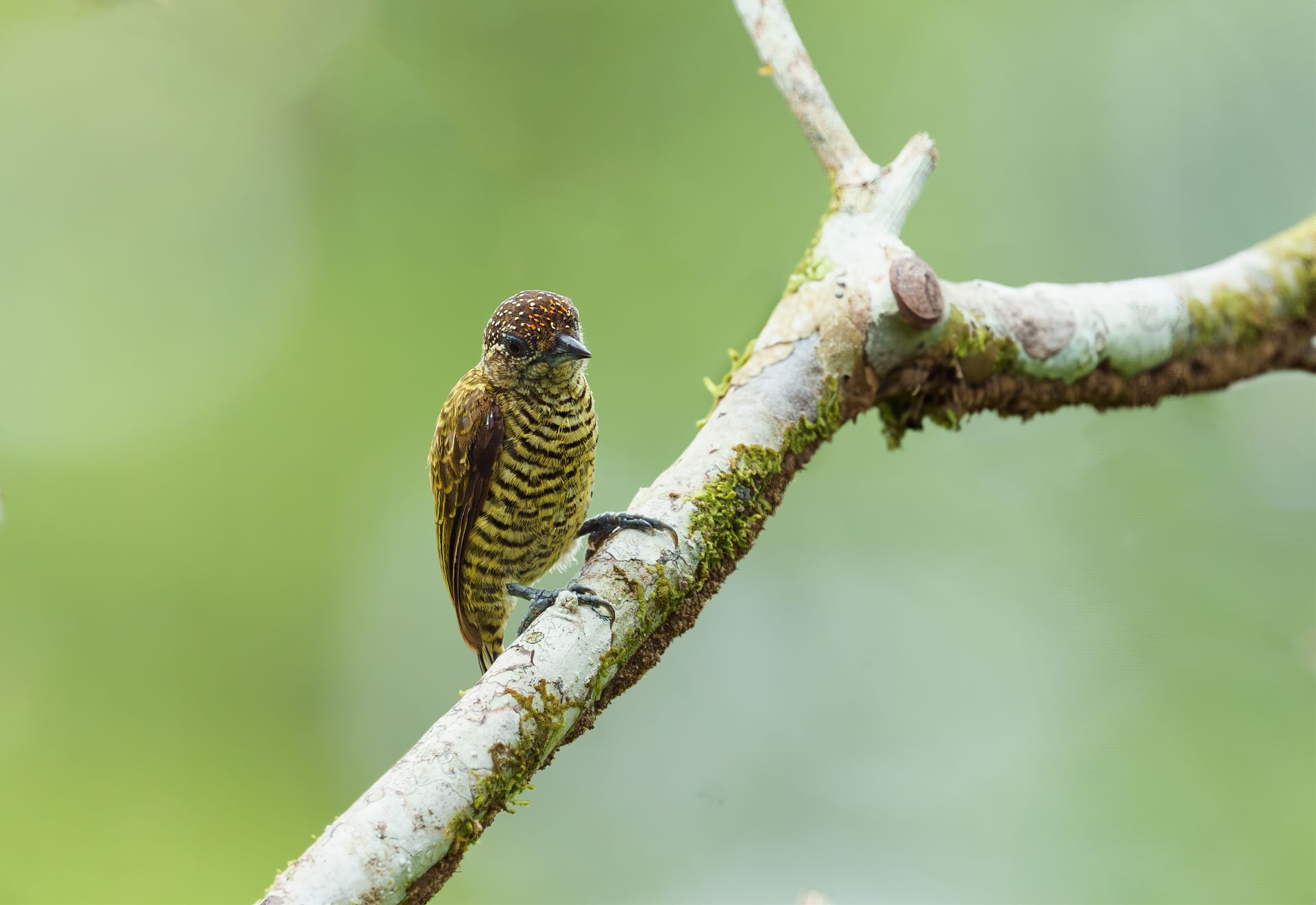
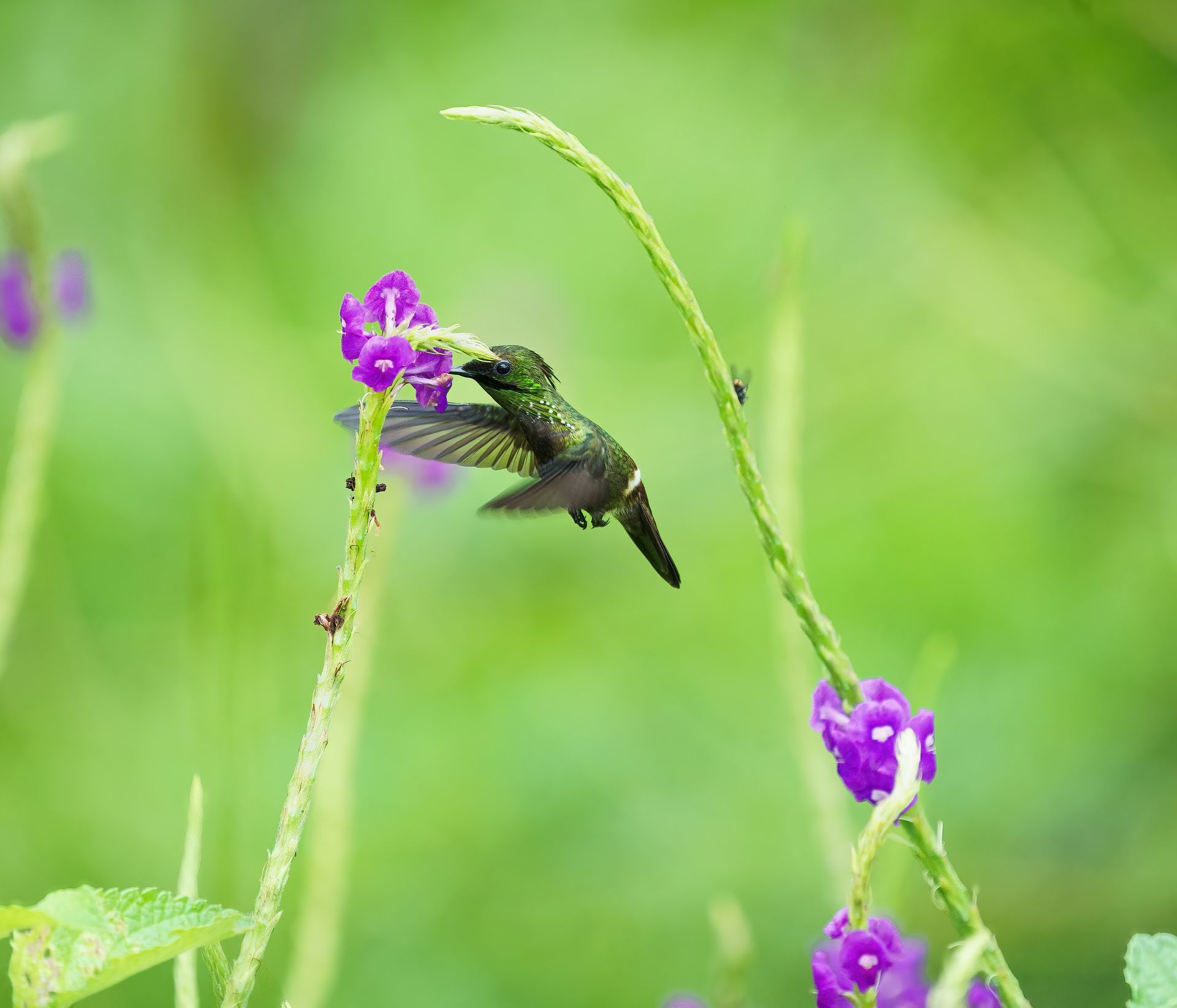
At this first site, incubation is currently underway: the female remains on the nest while the male forages, sometimes disappearing for two to three days at a time before returning with food. We're projecting a hatch in September, which makes the coming weeks an excellent window for observation and photography. Our team monitors the pair continuously and shares updates in real time, alongside sightings of other species recorded in the area, including the elusive bush dog (Speothos venaticus) and the dazzling Spangled Coquette.
Accommodation here is comfortable by any standard: four safari-style tents, each with a private bathroom, configurable as two single beds or one double bed, hosting up to eight guests. Everything — the social area, the tents, and the hides — sits close together, making the whole experience easy to navigate.
Photography takes place from two dedicated hides. The main hide sits roughly 100 meters from the nest tree, while a second hide, tucked further into the forest, offers similarly strong opportunities. Feeding stations nearby draw in a variety of birds and occasional mammals, with feeder sessions running 40 to 60 minutes. Hides are accessible daily between 6:00 AM and 6:00 PM, with exact timing coordinated around the reserve's occupancy and the birds' behaviour on any given day.
Harpy Eagle Nest Initiative — Community-Based Camp
The second site tells a different story, and arguably an even more urgent one. Here, the chick is already about 20 days old, and by November we expect it to be nearing four months — a stage during which the female stays close to the nest most of the time, offering strong potential for extended observation. As with the first site, our local stewards and community rangers monitor the pair closely and record additional species in the area, including the same bush dog and Spangled Coquette sightings.
Accommodation at this location is simpler and more rustic: basic field lodging with limited private facilities, generally arranged in six double rooms depending on availability. Photography here happens from a single open hide — but it sits just 40 meters from the nest, notably closer than at the Luxury Camp. Access follows the same pattern of a 4x4 transfer plus a walk, with all logistics coordinated by the local team on the ground.
This is a site built around community-led conservation as much as photography. It suits travellers who don't mind simpler lodging in exchange for a closer nest, a shorter hide distance, and a direct connection to the local rangers whose work makes this entire experience possible.
A Few Shared Notes for Both Sites
Space at either location is genuinely limited by tent and room availability, along with the rotation needed to keep hide sessions ethical and low-impact — so we recommend confirming your dates as early as possible. Because Harpy Eagle behaviour can shift week to week, our teams at both sites provide real-time updates, and itineraries are sometimes adjusted slightly to maximize your chances of a meaningful sighting. As with any remote expedition into Colombia's Amazonian and Orinoquían foothills, we recommend checking current vaccination and travel health recommendations in advance, and packing appropriate field clothing and rain protection for the humid, unpredictable climate.
Every booking also plays a direct role in conservation: revenue from these visits supports ongoing nest monitoring, community ranger programs, and habitat restoration work in the region.
Ready to Witness This Season? Book with Retorno Photo Tours
Two active Harpy Eagle nests, in the same season, within reach of one another — this is not a combination that happens often, and it may not happen again for some time. Whether you're drawn to the comfort and proximity of the Luxury Camp or the closer hide and community-driven spirit of the second site, now is the moment to plan your visit.
At Retorno Photo Tours, we've spent years building the relationships — with local guides, community rangers, and conservation partners — that make ethical, low-impact access to sites like these possible. Our work is rooted in a simple belief: that Colombia's extraordinary birdlife, from the Harpy Eagle to the smallest tanager, is best protected when local communities have a direct stake in its future.
If you're ready to see these nests for yourself, reach out to our team to check availability and start planning your Harpy Eagle expedition to Vista Hermosa.