
Harpy Eagle Photography in Colombia
Patience, Access, and One Unforgettable Frame
by David Casas
You usually hear the forest before you see the bird. Then, somewhere in the mid-canopy, a pale gray head turns — slow, deliberate, unbothered — and you realize the shape you've been scanning for an hour is one of the most sought-after birds on the planet.
Harpy Eagle photography in Colombia isn't a roadside stop between destinations. It's a patient, carefully coordinated rainforest expedition, built on local knowledge, respectful access, and the kind of encounter that can define an entire portfolio.
At Retorno Photo Tours, we build these expeditions around the people who know the forest best — the communities who've watched these eagles for generations, long before a camera ever pointed their way.
Why Colombia Is One of the Best Places on Earth to Photograph a Harpy Eagle
The Harpy Eagle is one of the largest and most powerful raptors alive — talons the size of a grizzly's claws, a slate-black back, a startling white chest, and a facial disk so expressive it looks almost human. It also happens to be one of the hardest birds in the Americas to photograph well.
Colombia is one of the last great strongholds for this species. Its Amazonian and Chocó lowland forests remain vast, connected, and largely intact — exactly the kind of mature habitat a Harpy Eagle needs to hunt, nest, and thrive. But habitat alone doesn't get you the shot. What makes the difference is access: long-standing relationships between local field teams and the land itself, built over years of watching, not just visiting.
That's the real advantage a Colombia birding tour built on community partnership offers over a generic wildlife trip — informed, ethical observation points instead of a hopeful walk into dense forest.
What Actually Happens on a Harpy Eagle Expedition
Here's the honest version: a Harpy Eagle can sit motionless on a high perch for the better part of an hour. There's no lek, no feeder, no guaranteed five-minute window. Success comes from time in the right habitat, not from chasing the bird.
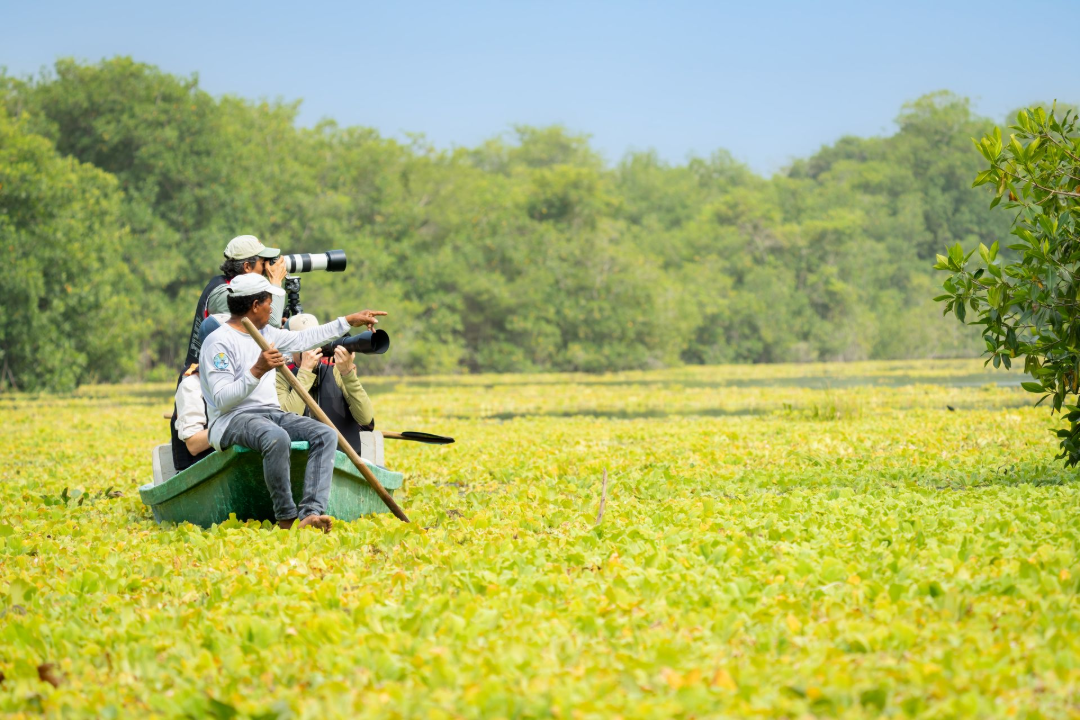
Known nest sites can offer the most consistent opportunities — especially with adults returning to feed a chick, or a juvenile perched in the open. But nests demand real discipline. Ethical operators keep their distance, limit group size, avoid playback, and follow the judgment of the local monitors who track these birds day to day, season after season. No responsible guide will ever promise a Harpy Eagle on command, and you should be wary of anyone who does.
What we can promise is the quality of the search: real time in productive habitat, a small group, and an itinerary with enough breathing room to follow the bird's schedule instead of a spreadsheet.
Packing for the Canopy: Camera Gear for Harpy Eagle Photography
A 400mm lens is a solid starting point, though 500mm or 600mm reach earns its keep when the eagle is perched high overhead. A teleconverter can help on bright days at distance, but under forest canopy, a fast native focal length usually wins out.
Your priorities should shape your kit:
- Lightweight zoom (100–400mm or 200–600mm): easier on forest trails, and useful when a bird appears closer than expected.
- Fast prime (400mm f/2.8, 500mm f/4, 600mm f/4): stronger low-light performance and creamier backgrounds, at the cost of extra weight.
- Second body with a 70–200mm or 100–400mm: for environmental frames and the wildlife that shows up in between.
Bring a tripod for long, fixed waits, or a monopod if you're moving through tighter forest. Add a rain cover, a dry bag for boat travel, spare batteries, and more memory cards than you think you'll need.
Expect to shoot at higher ISO than usual — 1600, 3200, sometimes more. A clean, sharp frame with a bit of noise will always beat a blurred one at a "cleaner" setting.
Technique that matters in the field: focus on the eye first — a Harpy Eagle's gaze carries the frame even from a distance. Then watch the bird's posture between shots: a crest lift, a wing stretch, a shift in stance. An eagle can look like a statue for forty minutes and then hand you three seconds that make the whole trip worth it. Don't spend that whole hour buried in the viewfinder — you'll miss the tell.
Weather, Light, and What to Wear
Colombia's lowland rainforest is green for a reason, and rain arrives fast, even in the "dry" season. Overcast skies are often a gift here — softer contrast between that bright white chest and the dark wing coverts. The tradeoff is less available light under a closed canopy, so plan your shutter speed accordingly.
Mornings tend to be the most active window, but a great encounter can happen at any hour, so the best itineraries stay flexible rather than rigid.
Pack lightweight long sleeves, durable field pants, a hat, and footwear built for wet, uneven trails. Insect protection and dry clothes for the walk back to camp matter just as much as your camera bag — comfort is what keeps you sharp when the moment finally comes.
Why Ethical Access Is the Whole Point
A Harpy Eagle isn't a trophy. It's a forest guardian, dependent on large, healthy habitat and a stable prey base — which means its survival is a direct measure of the forest's health.
That's also where community-based tourism earns its place, not as a marketing line but as a functioning system: when local guides, boat operators, cooks, and trackers benefit directly from a well-managed expedition, an intact forest becomes something worth protecting rather than clearing. It's the same principle behind Retorno's approach across all of our tours — specialist guiding, local partnership, and conservation built into the itinerary, not added on top of it.
Give It the Time It Deserves
The strongest Harpy Eagle trips are rarely built around a single morning. A few extra days improve your odds and take the pressure off both you and the bird — and they open the door to everything else the rainforest has going on: macaws crossing the canopy, monkeys working a fruiting tree, tanagers, toucans, antbirds, and the forest's entirely different cast of characters after dark.
Prefer a private itinerary built around one goal — the eagle, a specific lens kit, extra buffer days for weather? We can build that. Prefer a small-group departure paced for serious field photography? We run those too.
Ready to Photograph a Harpy Eagle in the Wild?
Bring your best glass, but bring your patience too. In a Colombian rainforest, every quiet hour under the canopy is part of the story — and when that pale gray head finally turns toward your lens, the image carries the weight of the forest, the journey, and the people working to keep both alive.
Have questions about gear, timing, or building a private trip?
Get in touch with our team — we'll help you plan an itinerary around your goals, your lenses, and the season.