
When Do Jaguars Hunt? Timing a Pantanal Sighting
Jaguars of Pantanal.
A jaguar stepping out of the shade on a riverbank at 10:30 in the morning can catch first-time visitors to the Pantanal completely off guard. So when do jaguars hunt? The honest answer is almost any hour. Their activity does follow a recognizable rhythm, though, shaped by temperature, prey, water, and how much human company they're used to. For photographers, learning that rhythm is far more useful than waiting for one perfect hour.
Jaguars can hunt at almost any hour, but in Brazil's northern Pantanal they're most often active around dawn and late afternoon, and they're regularly seen in daylight along the rivers. Heat, prey movement, water levels, and disturbance all shift the schedule, so more time on the water beats any single "best" hour.
When Do Jaguars Hunt in the Pantanal?
Jaguars are often called nocturnal predators, and across much of their range they're busiest after dark or at the edges of daylight. Dense forest, warmer temperatures, and human disturbance all push them that way. The Pantanal doesn't follow the pattern.
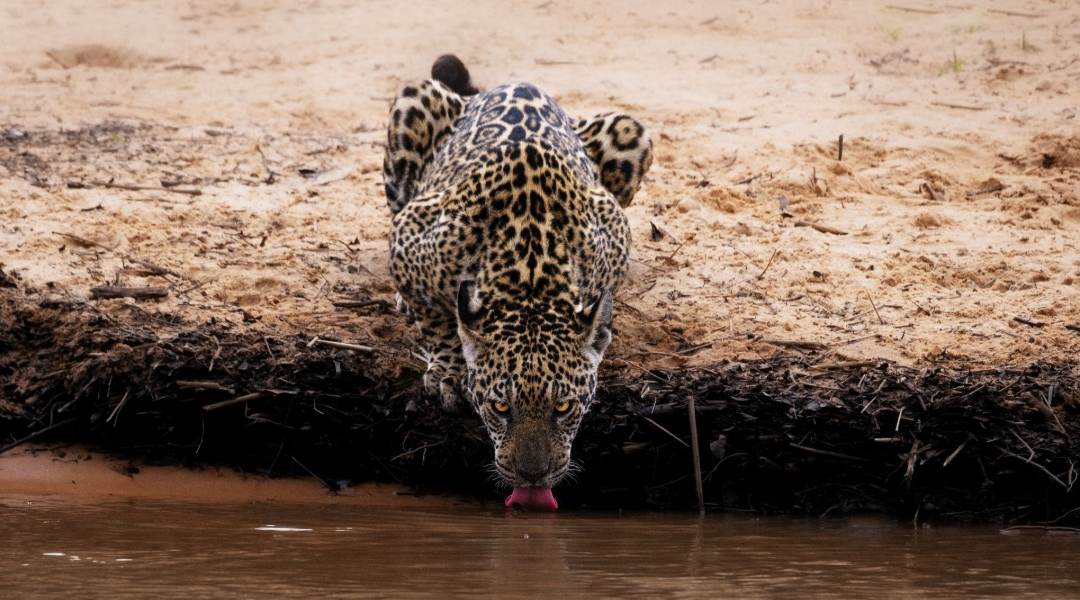
Along the waterways of Brazil's northern Pantanal, jaguars are regularly active in daylight. They patrol forest edges, cross beaches, rest in the shade, scent-mark riverbanks, and sometimes stalk prey in plain view of a boat. Midday action isn't a daily event, so don't plan around it. Daylight sightings are realistic, though, especially where the cats have grown used to respectful, regulated boat traffic.
Dawn and late afternoon are still the most productive stretches. The air is cooler, prey starts to move, and a jaguar that spent the hottest hours resting may resume its patrol. Then again, a memorable encounter can happen at noon, just after a rain shower, or while a cat walks the bank under harsh tropical sun. Wildlife doesn't work to a photographer's timetable.
Why Jaguar Hunting Times Vary
A jaguar is an opportunistic, powerful hunter, not a predator locked into a single routine. Its timing shifts with what's happening on the ground and in the water.
Heat and the need to conserve energy
By late morning the Pantanal can be brutally hot. During a long hot spell, jaguars commonly retreat into thick riverside vegetation, lie in the shade, or rest near water. Early departures and late-afternoon hours on the river put you out there when a cat is more likely to be walking, scent-marking, or searching.
Heat isn't a hard limit, though. Jaguars slip into the water to cool off, swim between banks, and stay active when an opportunity shows up. A mother with cubs, a territorial male, or a cat following fresh prey sign may be moving at an hour when another animal would be asleep.
Prey movement
Capybaras, caimans, peccaries, deer, turtles, and other possible prey each behave differently. A jaguar might wait near a favorite spot where capybaras enter the water, check shallow margins that caimans use, or move through cover while peccaries feed nearby.
That's one reason hunting is rarely obvious from the outside. A cat can look relaxed for an hour, then change in an instant: head low, ears locked forward, stride almost silent. The jaguar you took for a resting animal may have been reading the bank the whole time.
Water levels and seasonal access
Water reshapes the Pantanal. In the drier months, animals crowd around the remaining water, exposed beaches and accessible river margins. Jaguars use these corridors repeatedly, giving boat-based photographers a good chance to follow their daily movements.
Higher water levels spread prey around and change which banks, channels, and islands are productive. Jaguar watching doesn't become impossible, but the strategy does change. Experienced local boat crews and guides read those shifts through tracks, recent sightings, prey concentrations and the behavior of birds and other animals along the river. That local knowledge is a big part of why a good day on the water happens at all.
Territory, breeding and individual behavior
A large male may cover a lot of ground checking scent marks or responding to another jaguar nearby. Females with cubs tend to be more cautious and less predictable, and younger cats often behave differently from established adults. Some individuals get known for favoring particular stretches of river. Even so, familiar jaguars offer no guarantees.
That variation is part of what makes the Pantanal so special. You're there to watch a wild animal move through its own territory, on its own terms.
What Hunting Behavior Looks Like From a Boat
For photographers, the most dramatic hunting sequence usually isn't a chase. Jaguars rely on stealth, patience, and explosive force over short distances. They may stalk through tall grass, pause behind roots at the water's edge, or use dense vegetation to close in unseen.
A cat walking steadily along an open bank is more likely to be traveling or patrolling than hunting. Watch for changes in body language: slower steps, a lowered shoulder line, intense focus in one direction, and repeated pauses. If the jaguar vanishes into cover, don't assume the encounter is over. Waiting quietly at a respectful distance often pays off better than moving on too soon.
Photographing a hunt also takes restraint. A boat should never corner a jaguar, block its route, crowd a prey animal, or push either animal toward a confrontation. Ethical observation protects the cat, the prey, and the moment itself. It also makes for better photographs, because relaxed wildlife behaves naturally.
Planning for the Best Jaguar Photography Light
The best time to photograph jaguars isn't always the best time to see them. Soft morning and late-afternoon light gives warmer color, gentler contrast, and more detail in the coat's rosettes. Movement often picks up then as well, after a cooler night or before evening.
Midday calls for a different approach. Bright light throws deep shadows under the eyes and strong highlights on pale sand and water. Expose for the jaguar's face and coat, use a lens hood, and watch for reflections off the river. A 400mm or longer lens is valuable, but a zoom with a wider end is just as handy when a jaguar walks up the bank or swims close to the boat.
When a cat is walking, leaping over roots, or entering the water, shutter speed matters more than a very low ISO. For a moving jaguar, many photographers start at around 1/1600 second and adjust for the light, distance, and the boat's movement. Keep the camera ready even through quiet stretches. The moment usually begins before you've had time to rebuild your settings.
Field Time Matters More Than a Perfect Schedule
A short outing can produce an extraordinary sighting, but jaguar photography rewards patience. Several mornings and afternoons on productive rivers let guides follow recent activity, and they give you time to work with changing light, backgrounds, behavior, and angles.
Trip design matters here. A skilled local team can coordinate safe boats, reliable transfers, lodging close to the wildlife area, and flexible field hours, and make decisions based on real conditions rather than a fixed script. On a focused Pantanal journey, Retorno Photo Tours prioritizes time in the habitat and works closely with the people who know these waterways best. Trips come as Standard, Tailor-made or Private departures.
Pack sun protection, dry bags, spare batteries and a rain cover for camera and lens. The Pantanal can swing from blazing heat to heavy rain quickly, and the best encounter may arrive just as conditions turn inconvenient. Comfortable clothing and a stable place to sit sound unglamorous, but they keep you alert when the jaguar finally steps into view.
Nobody can demand a jaguar hunt from the landscape. Go ready for long, attentive hours, and value every sign of the cat: fresh tracks, alarm calls, a tail disappearing into cover, a paw print pressed into wet sand. That patience is often what turns a possible sighting into the photograph you came for.
Frequently Asked Questions
When do jaguars hunt in the Pantanal?
Jaguars can hunt at almost any hour, but dawn and late afternoon tend to be the most productive times. In the northern Pantanal, they're also regularly active in daylight, so a sighting at midday or after a rain shower is entirely possible.
Do jaguars hunt during the day?
Yes, in the northern Pantanal jaguars are often active in daylight along the rivers. They patrol banks, cross beaches, and stalk prey in the open, especially where they're used to respectful, regulated boat traffic. In denser forests elsewhere in their range, they lean more toward nocturnal activity.
What is the best time of day to photograph jaguars in the Pantanal?
Early morning and late afternoon give the softest light and often the most movement. Midday can still work if you expose carefully for the face and coat and watch for glare off the water, so it's worth staying alert through the whole day.
What shutter speed should I use for jaguar photography?
Around 1/1600 of a second is a good starting point for a walking, leaping, or swimming jaguar. Adjust from there for the light, your distance, and how much the boat is moving, and favor a faster shutter over a very low ISO.
Can anyone guarantee I'll see a jaguar hunt?
No. Even in the Pantanal, hunting behavior is rare and hard to predict, depending on the individual cat, the prey, the water level, and the weather. Time on the river with local guides who read recent activity is what improves your odds, and no responsible operator will promise a specific sighting.
Plan Your Time on the River
Retorno Photo Tours designs jaguar and wildlife photography trips with ample field time and local expertise. Choose a fixed-departure Standard tour, a Tailor-made itinerary built from existing routes, or a fully Private departure.
Questions about timing, gear, or which format fits your group? Write to us at dcasas@retornophototours.com.
Written by David Casas, founder of Retorno Photo Tours, wildlife photographer, licensed Birds and Wildlife Guide in Colombia (registration 007158).
Scheduled Tours
Western Amazon: Gateway to Chiribiquete.
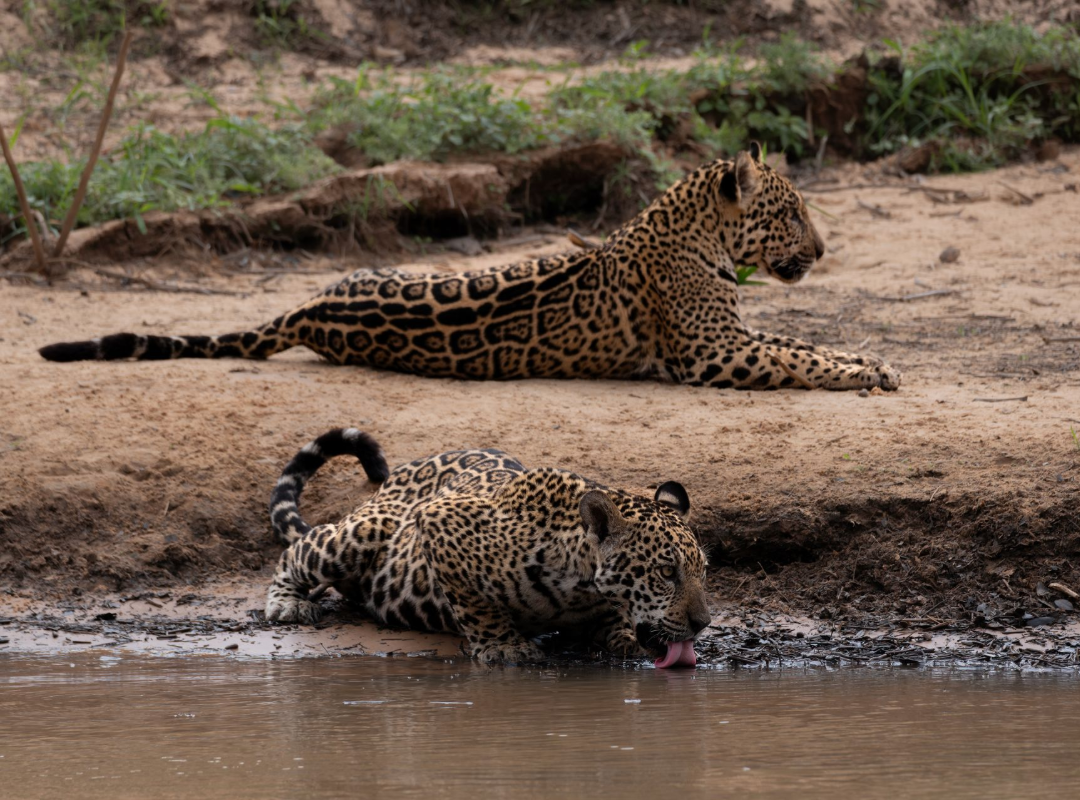
Jaguars of Pantanal
Amazon's Guiana Frontier - Mitu.
Emblematic Birds Photo Tour