
Harpy Eagle Habitat Guide for Photographers
The Harpy Eagle
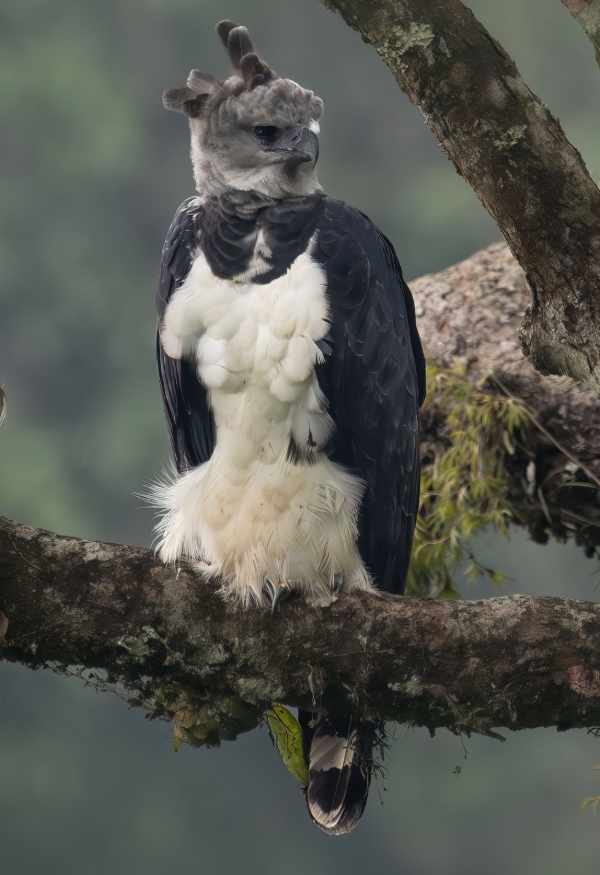
A Harpy Eagle is not a bird you find by walking a rainforest trail with a long lens and good intentions. It occupies immense, layered forests, often remains still for hours, and may be seen only briefly as it moves between a nest tree, a favored perch, and hunting areas. This Harpy Eagle habitat guide is designed for photographers who want to understand what makes a productive landscape, prepare for rainforest conditions, and pursue this remarkable raptor without putting pressure on the bird or the people protecting its forest.
What Harpy Eagle Habitat Really Looks Like
The Harpy Eagle is a bird of the Neotropical lowland forest. Across its range, it depends most strongly on large tracts of mature or well-connected tropical forest, particularly where the canopy is tall, prey is abundant, and disturbance remains limited. In Colombia, suitable habitat occurs in parts of the Amazon, Chocó biogeographic region, Magdalena Valley, and other lowland forest landscapes, though local presence is highly variable.
For a photographer, the phrase "rainforest habitat" can sound frustratingly broad. The difference between an unproductive forest and a viable Harpy Eagle area is usually not a single tree species or a viewpoint on a map. It is scale, continuity, and forest structure. Harpies use towering emergent trees for nests and perches, a dense canopy for cover, and a large hunting territory that can extend far beyond the location where a bird is first reported.
This is why a forest edge with a beautiful view is not automatically useful. A Harpy Eagle may cross an opening or use a river corridor, but it is adapted to hunting beneath and within the canopy. Its principal prey, including sloths, monkeys, and other arboreal mammals, depends on intact forest as well. Where forest becomes isolated into small fragments, the eagle loses more than nest trees. It loses a functioning prey base and the connected canopy it needs to move through its territory.
Nest Trees and the Vertical Forest
Harpy Eagles commonly nest high in enormous emergent trees, sometimes well above the surrounding canopy. A nest can be a massive platform of sticks, but seeing it from the ground is often difficult. The view may be obstructed by leaves, buttress roots, vines, and shifting light. Even when a nest is known, an adult bird may be absent for long periods while hunting.
Active nests deserve exceptional care. Breeding is slow, and a pair may invest years in raising a young bird. Repeated disturbance near a nest can change adult behavior, increase stress, and create unwanted attention around a sensitive site. Responsible field teams do not publicize precise nest locations, crowd access trails, fly drones near nesting birds, or encourage photographers to push closer for a cleaner frame.
The best images do not come from forcing proximity. They come from patient field time, respectful positioning, and an understanding that a photograph of a Harpy Eagle in its immense forest world can be more meaningful than a tight portrait made at the bird's expense.
Reading a Harpy Eagle Habitat Guide in the Field
A productive expedition begins long before the camera comes out. Local knowledge matters because Harpy Eagles are naturally scarce, their territories are large, and visibility in rainforest is limited. In many places, community members, forest monitors, Indigenous guides, and researchers are the people who first recognize a regular flight route, an old nest tree, or the vocal activity of a young eagle.
Their knowledge should guide the approach. That means accepting that the right plan may involve a predawn boat ride, a muddy walk to a forest observation point, and several hours of waiting with no guarantee of a sighting. It may also mean choosing not to visit a nest at all if the bird's breeding stage, weather, trail conditions, or community protocols make access inappropriate.
Listen as much as you look. Harpy Eagles can vocalize, particularly around nests or when young birds are present, but the forest usually gives subtler signals. Alarm calls from monkeys and birds may draw attention upward. A large shadow moving through a gap in the canopy can be the first clue. Fresh whitewash beneath a traditional perch, fallen feathers, or observations from local guides may help establish recent use, but none should be treated as an invitation to approach closely.
Forest geometry matters for photography. A perch along a ridge, riverbank, natural opening, or low-canopy slope may offer a brief window through the leaves. In contrast, a bird directly overhead in closed forest can be nearly impossible to photograph, even with a fast lens. The goal is not to manipulate the situation. It is to be ready when a naturally usable angle appears.
The Photography Challenge: Darkness, Distance, and Motion
Harpy Eagle photography is demanding because the bird's habitat is demanding. Under a closed canopy, light levels can remain low even at midday. High ISO performance, accurate autofocus, and disciplined exposure choices are more useful than chasing maximum reach alone.
A 400mm or 500mm lens is an excellent starting point, while a 600mm or 800mm setup can be valuable where working distance is greater and the view is open. Yet a longer lens also becomes harder to manage in a humid forest, from a boat, or on a narrow trail. A 100-400mm zoom can be the more practical second body when an eagle passes close overhead or appears unexpectedly near a perch.
Set expectations around shutter speed. A perched bird may allow a lower shutter speed if your support is stable, but a Harpy Eagle launching from a branch or crossing a canopy opening demands much more speed. Start by prioritizing a shutter speed that can handle sudden movement, then raise ISO as necessary. Modern cameras make this trade worthwhile. A sharp, high-ISO frame with the bird's crest and eye visible is far stronger than a soft file captured at a cleaner setting.
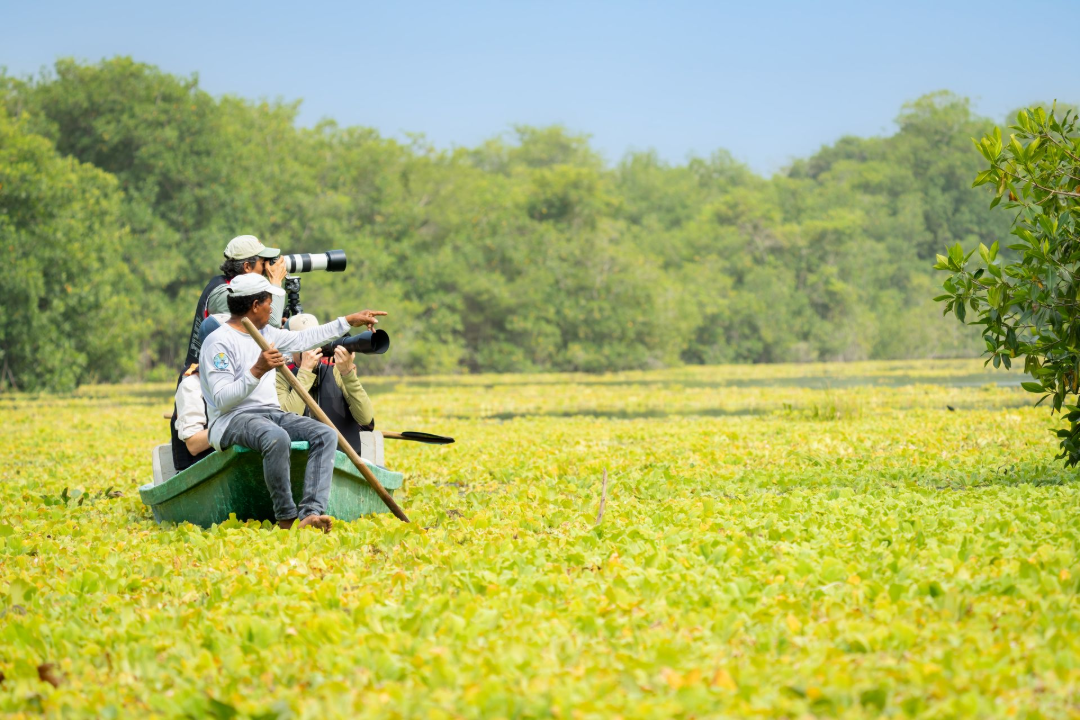
A lightweight monopod can help on established observation trails, though it is less useful when the subject may appear at any angle. Handholding is often the best choice for fast response, especially from boats. Protect equipment with rain covers and dry bags, but do not seal gear away so completely that you lose the moment. Condensation is a real concern when moving from air-conditioned lodging into humid forest, so give cameras time to acclimate before field sessions.
Compose for the Place, Not Just the Species
Every photographer hopes for a full-frame Harpy Eagle portrait, but the habitat can tell a fuller story. A bird perched among bromeliads, framed by buttressed trunks, or gliding above a forested river speaks to the scale of the conservation challenge. Wider compositions also work when the eagle is distant but the forest structure and available light are compelling.
If a young bird is visible near a nest, restraint becomes part of the craft. Avoid prolonged sessions, stay within the protocol set by local guides or researchers, and keep voices low. Never use bait to alter behavior. Playback should be avoided around raptors, particularly near breeding activity, because it can distract birds from feeding, guarding, or resting.
Seasons, Rain, and Realistic Expectations
There is no single Harpy Eagle season that applies across Colombia. Rainfall patterns differ dramatically between the Amazon, Chocó, and other forest regions, while breeding cycles can vary by location and year. A dry period may make trails more manageable and visibility slightly better, but rain is part of the habitat. Wet conditions can bring swollen rivers, slick clay trails, insects, and delayed transport, while also sustaining the forest systems the eagle depends on.
For photographers, the best timing depends on the objective. A known adult activity area may offer a chance for flight or perch behavior. A carefully managed breeding-area visit may create opportunities to document an adult's arrival, a developing juvenile, or the wider nest-tree environment. Neither option offers certainty, and ethical operators should never sell a Harpy Eagle encounter as guaranteed.
Build extra time into the itinerary if this bird is a primary target. One morning is rarely enough. Several field sessions give guides time to respond to weather, changing bird movement, river levels, and reports from the local community. That flexibility is often what separates a rushed search from a genuine chance at a memorable encounter.
Why Habitat Protection Is Part of the Experience
A Harpy Eagle is an apex predator, but it is also a powerful indicator of forest health. Its presence suggests that a landscape still supports mature trees, arboreal prey, and enough connected forest to sustain a wide-ranging raptor. Protecting that landscape requires more than a protected-area boundary. It also depends on local livelihoods, community-led monitoring, responsible land-use decisions, and visitors who understand that rare wildlife is not a product to be extracted.
This is where well-run photography travel can have real value. When guides, lodges, boat operators, cooks, and community monitors benefit from maintaining forest access and protecting wildlife, the eagle becomes part of a living local conservation economy. Retorno Photo Tours approaches these journeys with that responsibility in mind: photographic opportunity must remain secondary to the welfare of the species and the people who know the territory best.
Pack for rain, bring more patience than you think you need, and let the forest set the pace. When a Harpy Eagle finally appears through the canopy, the privilege is not only the frame you capture, but the intact world still holding it aloft.
Scheduled Tours
Western Amazon: Gateway to Chiribiquete.
Jaguars of Pantanal
Amazon's Guiana Frontier - Mitu.
Emblematic Birds Photo Tour